
Like Dr Frankenstein, we built a monster. This is the ultimate tennis player
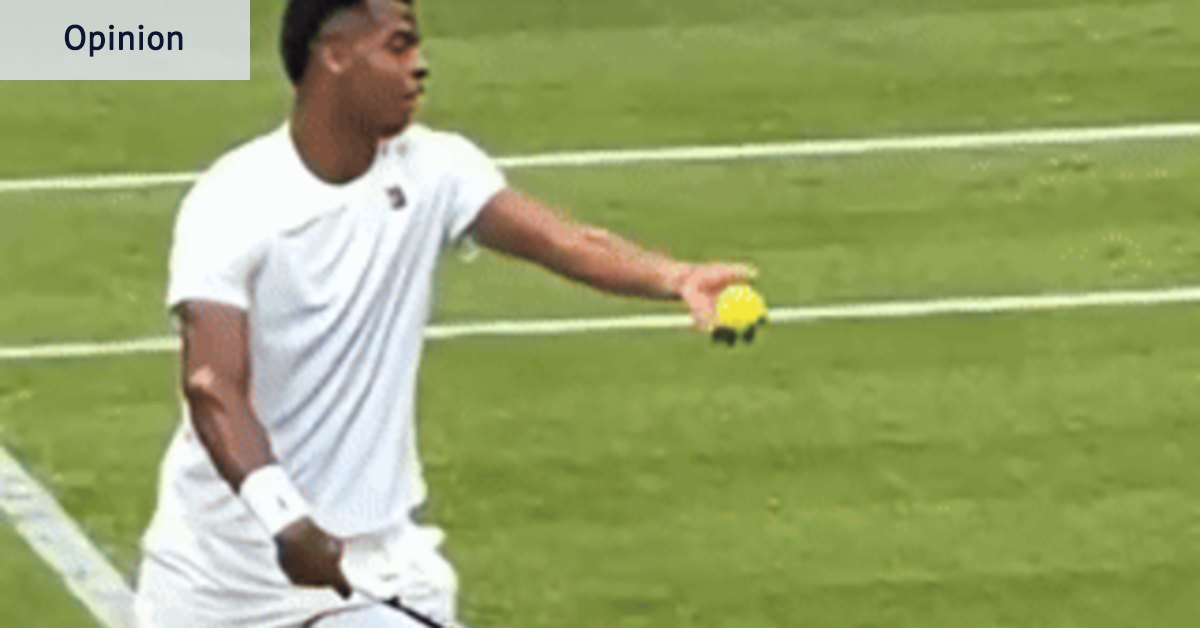
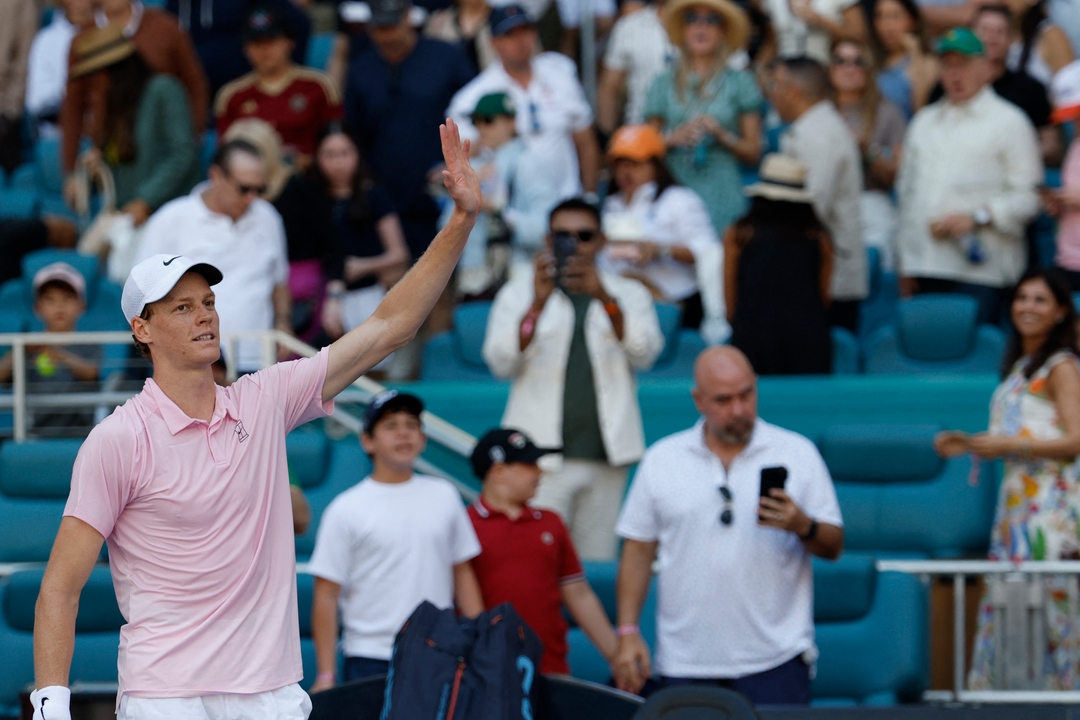
Best backhand: Jannik Sinner (Italy)There was no argument here, as Sinner’s backhand is unparalleled. Even Alcaraz has no doubt his rival has the edge; however, he did defend his own backhand in Seoul last Friday before an exhibition match against Sinner. “I think my backhand is not that bad. I can use it even more than a forehand in a match.” Alcaraz said.Rea agrees that the difference between the two on the backhand is not as big as it may have once seemed. “The backhand-to-backhand battle from the back of the court might give the edge to Sinner, [however] Alcaraz has got the ability to have more variety from his backhand side and change gears a little bit,” Rea said.What has impressed experts most about Sinner’s ground strokes is his clean ball striking and consistency, which has been on display from the moment he began contending for grand slam titles in 2020. “On Sinner’s forehand and backhand side, his speed has incrementally increased year-on-year. It’s normally hard to increase speed and spin at the same time because there is a trade-off there… but he is doing both at the same time, which makes him impossibly heavy to handle at the other end,” Rea said.McNamee rated Djokovic as the man with the second-best backhand in world tennis, but Sinner’s is numero uno. “It’s pure,” McNamee said. “The backhand is [Sinner’s] best shot.”Best drop shot: Carlos Alcaraz (Spain)Finesse is not normally the first word that comes to mind when Alcaraz is mentioned, but his drop shot is top-notch. He can deploy a slice backhand and has added the drop shot to his game to keep his opponents guessing and running.Alcaraz’s ability to move around the court is unparallelled.Best return of serve: Jannik Sinner (Italy)Sinner just gets the nod over Djokovic. Both return serve better than a comedian facing a heckler.As for alternatives, Draper adds variety to the conversation. The tall left-handed Brit has a huge wingspan, which helps him reach good serves and punish any serves that sit up.Medvedev, who won the Brisbane International, is renowned for standing back and ensuring the return lands in play so his endurance and physicality can come to the fore.Handling pressure: Novak Djokovic (Serbia)This is no knock on the top two, but Djokovic has handled the big moments for two decades now so he earns the right to be rated the best player in the tournament at handling pressure.Fitness: Alex de Minaur (Australia)Again, Alcaraz and Sinner have no overall peer, with Alcaraz being the best mover in the game, but for some local flavour and with some variation, we gave the gong to de Minaur. His pure speed from point A to point B is frightening, and Alcaraz tends to warm into his year, which is why we are yet to see him at his best in Melbourne in January.Having said that, there has never been a better-prepared and fitter player than Djokovic, while Medvedev has made a living out of adopting a counter punching, marathon-running mentality.Attempts the impossible: Lorenzo Sonego (Italy)He might be ranked No.40 in the world, but this shot demonstrates better than any what the modern professional is capable of on-court.Women’s tennisBest serve: Elena Rybakina (Kazakhstan)Although it was off at times in Brisbane last week, Rybakina’s serve is the best in women’s tennis. She has great variety and generates speed, kicking and spitting the ball at the receiver.The 26-year-old has also earned a reputation for delivering a brilliant serve right when she needs a free point most, with her numbers when down break point the best in the game.She led the top 50 players in 2025 in first points winning percentage and percentage of service points won.Best volley: Belinda Bencic (Switzerland)Bencic’s net play is different to most of her peers, but it is brutally efficient.“She is trying to punish her ground strokes to the back of the court and then looking to pounce with the drive volley or a swinging volley. She comes forward a lot, and she operates well when she does.” Rea said.Bencic is skilful at taking the ball early, moving into play a half-volley on her way to the net, which puts her in a strong position compared to her opponent.McNamee agrees Bencic has the best volley among those in the top 50, but said the player with the best volley in tennis is doubles star Hsieh Su-wei, who he coached with great success until the end of last year.“The problem with women’s tennis is, because of their reach and their lack of agility compared to men, it is harder for them to get to the net so they don’t get to use the volley often. It’s not a shot you need that much in women’s tennis,” McNamee explained.Best forehand: Madison Keys (USA)The reigning Australian Open champion has power to burn and has promised to come in behind her ground strokes to volley aggressively.She has the forehand to make that happen if she can believe in her ability.Her average forehand speed in last year’s Open was 130km/h, with her deep swing and fast feet combining with a big serve to win the championship.She hit a remarkable 103 forehand winners in her first six matches in the Australian Open. Iga Swatiek has a reputation for a strong forehand, but opponents are no longer intimidated and some on the tour have even suggested players will attack that part of her game.Best backhand: Amanda Anisimova (USA)Jelena Dokic was in awe watching Anismova peel off a backhand winner against Kimberly Birrell at the Brisbane International, saying she had the best backhand in the world: “Have a look how low she gets down, [look at her] shoulder rotation, [and] hip rotation, [she] hits through the ball [and her] head is still.”Anisimova’s strength and power meant Rea had no hesitation in declaring her a standout when it came to the backhand.“At the US Open [last September when runner-up to Sabalenka] she actually hit the ball faster than Alcaraz and Sinner from A to B. She might have less spin on the ball, but from A to B she was faster than Swatiek, faster than Alcaraz, faster than Sinner, [and] faster than Djokovic for pure ball speed,” Rea said.“If you gave me one backhand for my life it, would be Amanda Anisimova.”Best drop shot: Mirra Andreeva (Russia)Andreeva is a rising star and her drop shot is top-notch. McNamee says the claycourt specialists generally have the best drop shots.“Andreeva is your Martina Hingis of this era,” he said, adding that while Sabalenka doesn’t have the best drop shot it’s an element of her game worth watching as she tries to add some nuance to her game.“[Sabalenka] uses the drop shot to complement her power, and if she gets caught out of position on the return of serve she is actually prepared to take her medicine and get back in the point, trusting her movement to get back into the point after perhaps starting behind the eight-ball after having to chip ball back into play. That is an evolution in her game,” Rea said.Best return of serve: Coco Gauff (USA)In a recent interview with Kim Clijsters on Andy Roddick’s Served podcast, the superbly skilled Ons Jabeur said she called Coco Gauff an Octopus because of her ability to return balls others would fail to reach.Despite Gauff’s serve being below that of the best players, Roddick thinks people should focus on the qualities that keep her inside the top five.“Coco Gauff sets up her defence with patterns… [she is the] best in the world at being uncomfortable and getting a W. She is a winner,” Roddick said.The yin and yang in women’s tennis makes the tournament enthralling because Sabalenka and Rybakina’s weapons are on the serving side, while Gauff and Swatiek are on the returning side. Gauff won an incredible 46.3 per cent of her return games in 2025.Handling pressure: Aryna Sabalenka (Belarus)Keys saved a match point against Swatiek in the semi-final en route to her breakthrough Australian Open decider, but Sabalenka, the world No.1, consistently rose to the fore when the pressure was at its fiercest throughout the year.Her US Open performance, when she came from one set down and faced a break point in the third set but did not buckle, was a real standout. In a 48-minute final set, where she blew two match points, Sabalenka eventually wore down Jessica Pegula to show her mental strength and win.Fitness: Mirra Andreeva (Russia)Iga Swatiek admitted to being “super sore” after the United Cup, so it was impossible to rate her as the fittest player heading into this year’s Australian Open, despite her intense training regime.The one to follow here is Andreeva, who runs herself ragged on court.“For a youngster, her ability to defend is phenomenal,” Rea said.Attempts the impossible: Karolina Muchova (Czechia)Muchova is in good form, making the semi-final of the Brisbane International after beating Rybakina, so she is far from a one-shot wonder. But being remembered for a shot such as her “tweener” at last year’s Dubai Open is not a bad thing.Follow our live Australian Open blog each day from January 18 for results, news, analysis and interviews.

.jpg)
Most Popular


Pepperdine University Athletics
10 hours ago
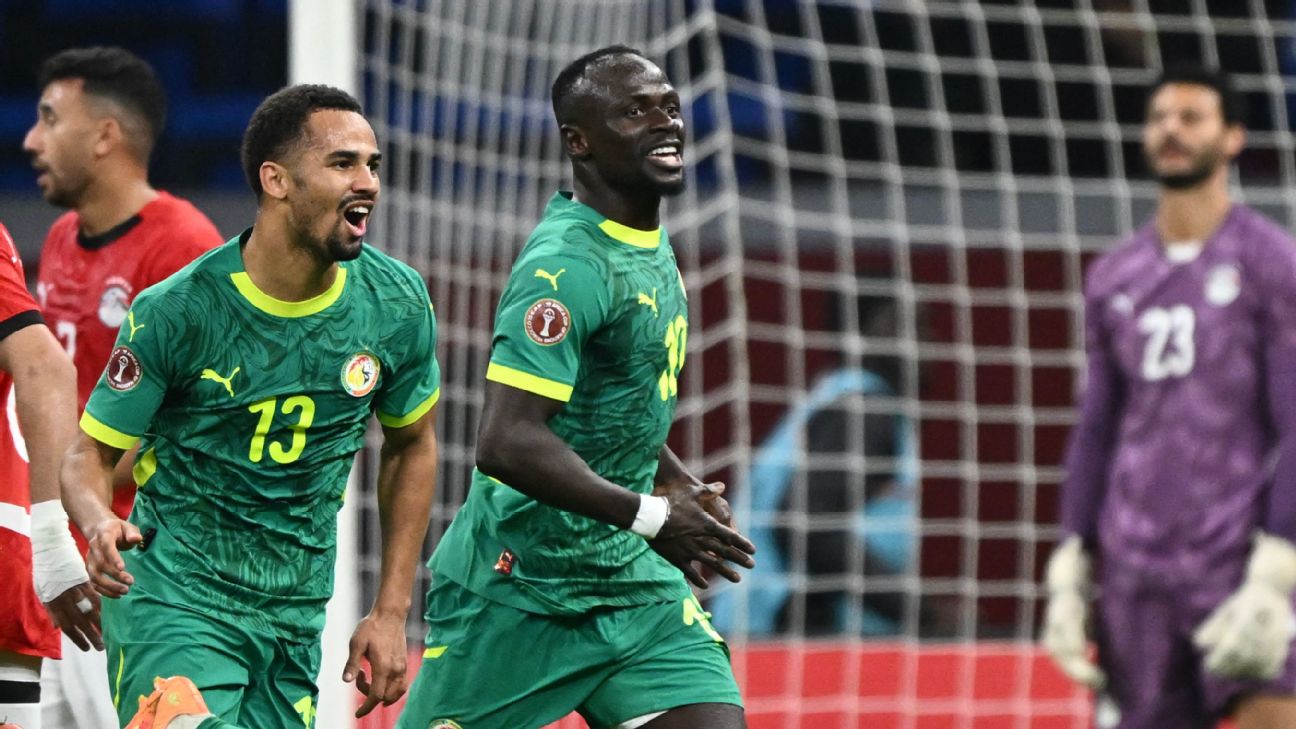
Senegal's World Cup jersey won't have two stars
9 hours ago


Women's Tennis Set for Sunday Road Clash at NIU
8 hours ago