
The secret is out: how Australian Open helped usher in three-week slam festivals

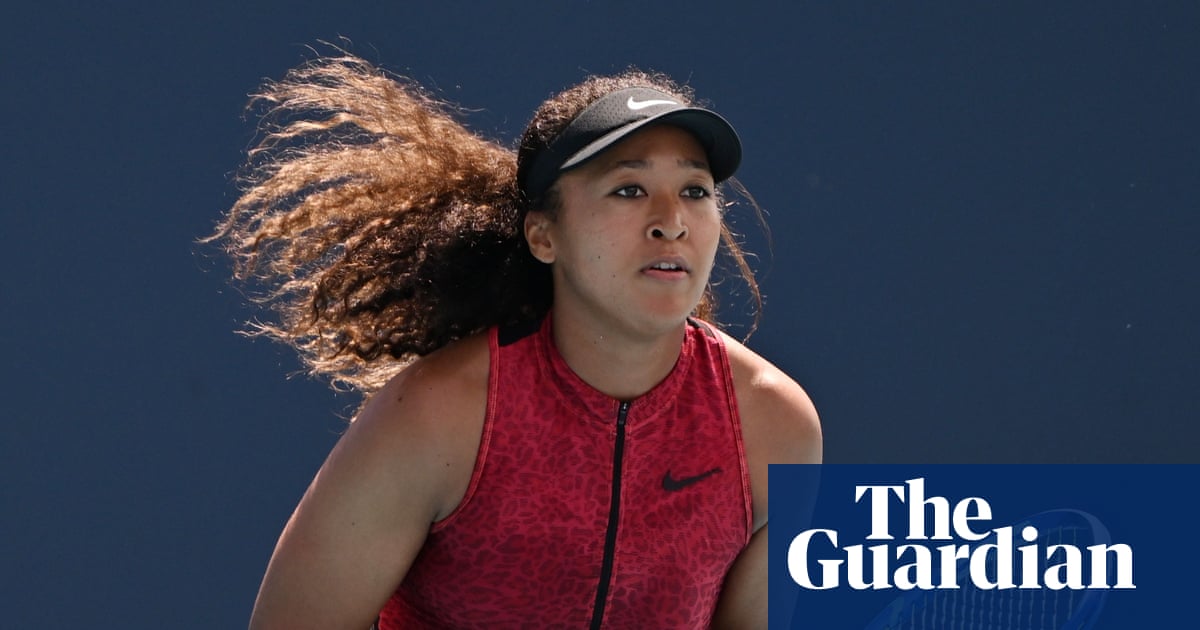
During the early days of the US Open singles main draw last year, the tournament director, Stacey Allaster, was holding court with a small group of journalists in a suite overlooking Arthur Ashe Stadium. Much of the discussion centred on the revamped mixed doubles tournament, which had dominated the tennis discourse for days. With a smile, Allaster explained the amount of work that had gone into the event and cited the final attendance numbers for the week it was held. The US Open, she asserted, is now a three-week event.For many years, the traditional grand slam fortnight was preceded by a nondescript week of preparation. While lower-ranked players quietly worked through the qualifying draw in front of vacant stands, the top players finished their preparation to minimal fanfare. Access to the tournament grounds at the Australian Open, French Open and US Open were free for qualifying. Still, few people came. To most hardcore fans, grand slam qualifying was an oasis for tennis hipsters, the sport’s best-kept secret.The secret is out. Over the past decade, the grand slams have gradually come to understand the great potential of their qualifying weeks and they have transformed them into true extensions of the tournament. These initiatives have been led by the Australian Open and the US Open, which at times seem to be in the middle of an arms race to build the most spectacular lead-in week possible.While the US Open branded its qualifying week as “Fan Week”, the Australian Open settled on “Opening Week”. The concepts are very similar, attempting to attract tens of thousands of fresh spectators, enticed by the promise of watching top players practise and other professionals compete for a fraction of the price of entry to the subsequent two weeks. A grounds pass ticket to the Australian Open’s Opening Week is good value at A$20 (£10), but at the US Open entry to the tournament grounds during Fan Week is free.Each day at the Australian Open this week, the tournament organisers have published comically large attendance records, with tens of thousands of spectators streaming through the gates of Melbourne Park each day. On Monday the 29,261 attendance eviscerated the previous record of 7,543 and on Thursday the figure was 35,805, with a total attendance of 136,248 in the first four days. Some have argued that Tennis Australia’s marketing is actually too good, with a number of spectators complaining on social media after arriving on the grounds this week expecting to see main draw matches.These days, the event is more akin to a festival than a tennis tournament. The grand slam oval, a large separate space filled with food venues and hundreds of seats, is located at the southern point of the grounds. The oval is built to host the masses of spectators that will enter the grounds once the main draw begins, but even on a Tuesday afternoon in Melbourne the seats are about 70% full. A stage sits at the centre and hosts a variety of trivia games, musical performances and player appearances.Beyond the exorbitant food and drink prices, these weeks also serve a positive purpose. They provide a platform to drive grassroots participation, with multiple mini-tennis courts around the grounds and a Kids’ Tennis Day on Saturday. Outside John Cain Arena, hundreds of parents have queued up each day to receive free rackets as part of Tennis Australia’s drive to give away a total of 5,000.During the open daytime practices this week, only the bottom half of the 15,000-seated Rod Laver Arena is open to spectators, yet Novak Djokovic and Carlos Alcaraz have filled out the entire second half of the bowl. Other tennis events include ticketed full exhibition matches, the Red Bull bassline exhibition tournament and an inaugural opening ceremony featuring Roger Federer. On Thursday there was the One Point Slam, which launched to great fanfare, the Australian Open’s answer to the US Open’s reimagined mixed doubles event.While the French Open has not developed its lead-in week as dramatically as the two hard-court grand slam tournaments and its tickets are more expensive, it is still accessed by a significant number of spectators. One of the more memorable moments of the 2024 season was the deafening cheers from a packed Court Suzanne Lenglen, the French Open’s second biggest stadium, as Dominic Thiem played his final match in Paris.While the festivities continue in Melbourne, the latest chapter of Wimbledon’s never-ending legal battle surrounding the All England Lawn Tennis Club’s Wimbledon Park Project, its statutory trust claim trial, is unfolding in the high court. It feels fitting. The AELTC’s attempts to convert the private golf course directly across the road into an extension of the club, which would allow Wimbledon to hold its qualifying event on-site, has been mired by various legal challenges. The proposals include converting some of the private space into a public park, along with 38 new grass courts and a new show court.While the other grand slam tournaments continue to expand at a dramatic pace, Wimbledon, which once towered above all others, is being left behind. The qualifying tournament is essentially held on a basic field in Roehampton. Between its relatively tiny grounds and the delicate nature of the grass surface – meaning it would be inadvisable to host pre-tournament events on Centre Court or Court No 1 – the All England Club’s current facilities are simply not compatible with the initiatives demonstrated at the other majors. Wimbledon is the last two-week grand slam tournament left.


.jpg)
Most Popular



Pepperdine University Athletics
22 hours ago
Senegal's World Cup jersey won't have two stars
21 hours ago