The struggle and survival of Australia’s newest tennis star
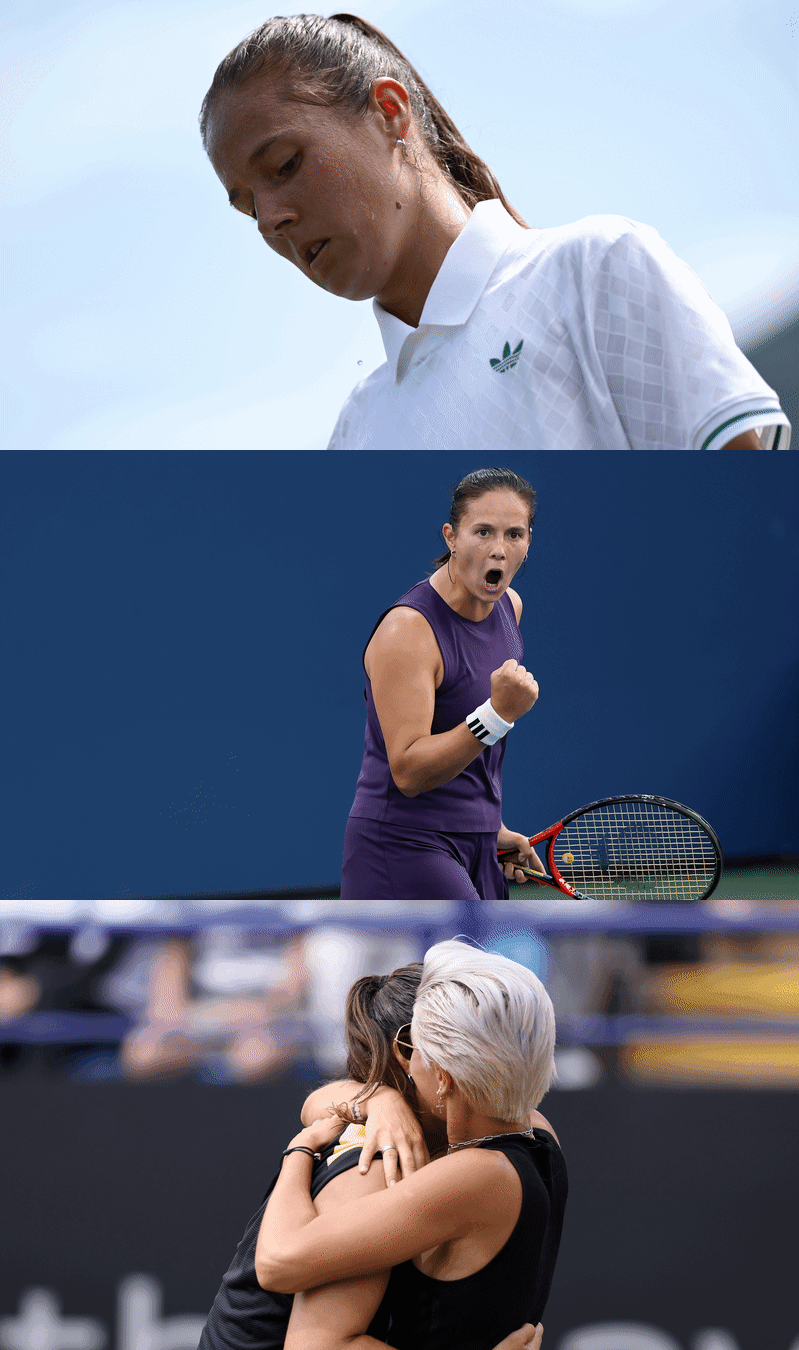
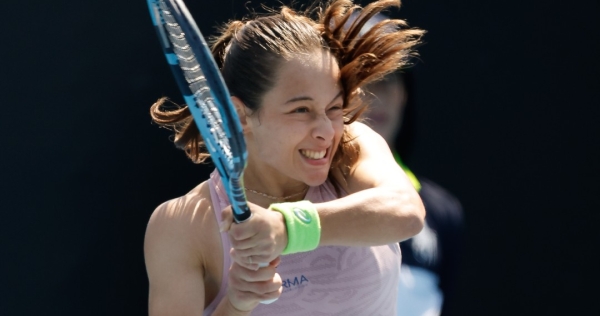
The tumult is hard to overstate. Two weeks earlier, she had been banned from playing at Wimbledon due to the invasion, along with all other Russian and Belarusian athletes, but had also just come off a career-best run with a semi-final appearance at the French Open.The tennis tour marched on, and so, too, the invasion, along with Kasatkina’s rich vein of form. She won her fifth and sixth career titles – in San Jose and Granby (Canada) – in August that year, with Sabalenka, Badosa and Elena Rybakina among the opponents she tossed aside along the way. She moved back inside the top 10.The next week, she lost in the opening round of the US Open – the same month Russia announced a partial mobilisation of its citizens. Kasatkina finished the year ranked world No. 8 and qualified for the prestigious WTA finals, where only the top eight female players are -invited to compete.As the situation at home in Russia began weighing ever more heavily, her agent Morris took the first steps to ease what pressure he could by approaching Tennis Australia chief executive Craig Tiley about a nationality switch, but no action was taken.Kasatkina had all but given up hope on becoming an Australian when Morris put the question to the organisation once more at the 2025 Australian Open. This time, action was swift.Tiley communicated with the Department of Home Affairs, supplying Kasatkina with a letter supporting her application for “people who have an internationally recognised record of exceptional and outstanding achievement in an eligible area”. When she stepped off the court at the Miami Open, -following a round-two defeat to Hailey Baptiste in March, no one but a small group of insiders knew Kasatkina would be walking out at the Charleston Open a week later as an Australian.“Welcome mateee!” These were the words Australian doubles legend Rennae Stubbs left on Kasatkina’s Instagram post confirming her nationality switch on March 29, and she wasn’t the only one to leave words of support. Australian fans began welcoming her to the “best country in the world” – a place where the Pride flag has been marched across the Harbour Bridge and where the sails of the Sydney Opera House have been lit up with its image.Kasatkina played her first match (and won) under the Australian flag on April 3, 2025, on a 30-degree day reminiscent of the conditions in which Aussies thrive come January at Melbourne Park. How was her first match as an Australian? Stressful, but reporters at her press conference were greeted with trademark warmth: “What’s going on … mates?”Yet swinging from lows to highs is sometimes perilous, too. “Honestly, I was over the moon, I was so happy, but sometimes you just don’t know,” she says. “Things like this can make you feel up, or sometimes can make you go down mentally. Unfortunately in my case, it was more difficult mentally.”It was, and is, painful for Kasatkina that the country of her birth – the place she grew up and where her parents still live – does not accept her. In 2020, Russian President Vladimir Putin moved to have his country’s constitution amended to define marriage as between a man and a woman. In 2023, Russia’s supreme court labelled the LGBTQ+ movement as extremist.When Kasatkina came out in 2022, she was only the second professional Russian athlete to do so, after soccer player Nadezhda Karpova earlier that year. “This notion of someone wanting to be gay, or becoming one – so ridiculous,” Kasatkina said at the time. “I think there’s nothing easier in this world than being straight. Seriously, if there is a choice, nobody would choose being gay. Why make your life harder, especially in Russia? What’s the point?”When does she think it would be OK for her to hold hands with her partner in her homeland? The answer, she says, is “never” – which is why she is in equal parts grateful to Australia and heartbroken by Russia.‘I want to be myself. We’ve only got one life, so I want to live it as best as possible with the person I love.’Daria KasatkinaKasatkina is not going to deny her past, sever her connection to Russia, or forget where she grew up, but the move to Australia was necessary. “I want to be myself,” she says. “We’ve only got one life, so I want to live it as best as possible with the person I love. And, if I had to make this decision to be fulfilled, this is what I’m going to do.”Sometimes – often – she wonders why. Why does it need to be this way? Why does she have to go through so much pain? “It’s unfair, but I cannot do anything about it,” she says. “If one place is not accepting me, I have to find a place where I will be accepted.”In this, too, Kasatkina is not alone. Australia has a history of taking in Russian and Central European tennis players. Daria Saville, Arina Rodionova and Ajla Tomljanovic are among some of the best-known. But it takes more than a diplomatic switch and a new flag to make someone feel like an Australian.“Something changed in me. From the moment it happened, I didn’t feel the same as I did before, that’s true,” Kasatkina says. “But I have to be honest here, I wasn’t born in Australia, I didn’t watch the cartoons which all the kids were watching when they grow up ... It’s not something which happens overnight.”It is, however, a transition made much easier by the willingness of Australians to accept “Dasha”, as she’s known, as one of their own. They’ve been turning up to support her since the announcement in late March, with chants of “Aussie, Aussie, Aussie” echoing throughout stadiums. Inside the tennis bubble, Australian players, coaches and administrators also came forward to offer support.This kind of warmth and community is uniquely Australian, says Kasatkina, and something she noticed the first time she came Down Under in 2016. It’s a quality, she concedes, she had been jealous of in the past, with Australian spectators seemingly caring more about whether their players have given it a fair go than winning at all costs.“I’m feeling a bit uncomfortable, in a good way,” she says. “Because it’s so different compared to what I’m used to ... I hope one day I can call myself a ‘real’ Aussie, but I have to be honest. For the moment, I have just become one, and I am on the way. I step on this long road.”The tale of how Daria Kasatkina and her partner Natalia Zabiiako met is something of a modern-day love story, with Zabiiako sliding into Kasatkina’s DMs. The two went public with their relationship in 2022, and on May 7, 2025 – her birthday – Kasatkina proposed. “It was one of the best moments of the year,” Kasatkina says. “And honestly, of my life as well.”Zabiiako is a Russian-Estonian figure skater who won silver at the 2018 Winter Olympics in PyeongChang, and so can empathise with the life of a professional athlete. Now retired from competition, she travels with Kasatkina, recording and editing their YouTube channel “What The Vlog” about life on tour.What started as a bit of fun has now turned into a full-time job, with Zabiiako doing all the filming and editing, and with the kind of behind-the-scenes access most players would shy away from. The duo concede they have, at times, questioned whether it’s the right thing to do. After all, if honesty is the aim, you have to be just as willing to turn the camera on yourself after a loss as after a win.And those videos can be a tough watch. The ones where a tournament ends in tears, with Zabiiako comforting Kasatkina on the floor of another hotel room, in another city. The hard truth of tennis is that unless you’re lifting the trophy, you’ve endured a loss.Fortunately, in these moments, Kasatkina has someone to brush the hair out of her eyes in front of the camera, or put an arm around her as she struggles to shake an illness for the third tournament in a row. Someone to dance in the street with, or to take to a Broadway show because, yes, she’s in New York for another US Open, but she’s also a tourist.It’s important to them that they show people the gruelling nature of life on tour, but also that life exists away from the court. Their channel is about more than the game. They don’t shy away from difficult topics, such as when they realised they were queer, whether they plan to have kids (maybe), or how they spend their downtime (drinking coffee and eating avocado toast).“People send messages that they love our vlog so much, and for some reason it changed their lives,” Zabiiako said in an interview with the WTA last year. “And then I think that we’re doing the right thing.”The break Kasatkina took at the tail-end of 2025 is the longest break she’s had in 11 years. How did she spend it? With the war ongoing – and Kasatkina not willing to risk returning to Russia – she met her family, including – finally – her father, in Dubai. She travelled to Estonia to visit Zabiiako’s family, too, and went to a friend’s wedding in Bahrain – the first wedding she’s ever attended. She reunited with her childhood best friend. “She was in Dubai for five days, we didn’t shut up for one minute,” she laughs. “We had so many things to discuss because she had a lot going on in her life, and a lot of changes, me as well. We were just non-stop, non-stop, non-stop.”With overwhelming joy, too, came the reality of just how much she has missed, and how much time has passed. “The worst thing is when you don’t see your family for a long time or your friends, and then you see each other in one year, and then you see how everyone is -getting old,” she says.“Eventually, you keep asking yourself, ‘Am I doing the right thing? You know, should I maybe not quit, but maybe do it less?’ All these thoughts are just getting through your head, even though you don’t want to think about it, but this is just growing up – you start to think more about all those things.”Despite it all, she still loves tennis, and thinks it will love her back. “Honestly, I feel that the downhill is about to go uphill,” she says. “Which is the important thing.”How different will things be in 2026? The tennis schedule won’t change. The number of mandatory tournaments (20) won’t change. Neither will the demands of training and travel. But if 2025 was anything, it was a learning curve.At the time of our interview, Kasatkina was preparing for her first Australian Open as an Aussie. She knows that the Open will be her first experience of a “home slam” – to step out on Rod Laver or Margaret Court Arena as one of the top-ranked Australian athletes in front of a raucous Australian crowd. “For sure, I am going to be stressed – I don’t know what to expect,” she says. “But for sure, it’s going to be good.”Kasatkina starts 2026 ranked outside the top 30, and at the time of writing could go into the Open unseeded – the first time for her at a grand slam since the 2021 Australian Open. But for now, that’s not a priority. There’s more than tennis to look forward to since becoming an Australian, from the “fluffy animals” to the “best coffee in the world” and, of course, the freedom.“All I want to achieve, honestly, it’s not the results or points or ranking,” she says. “I want to keep growing this feeling of joy.”
.jpg)
Most Popular