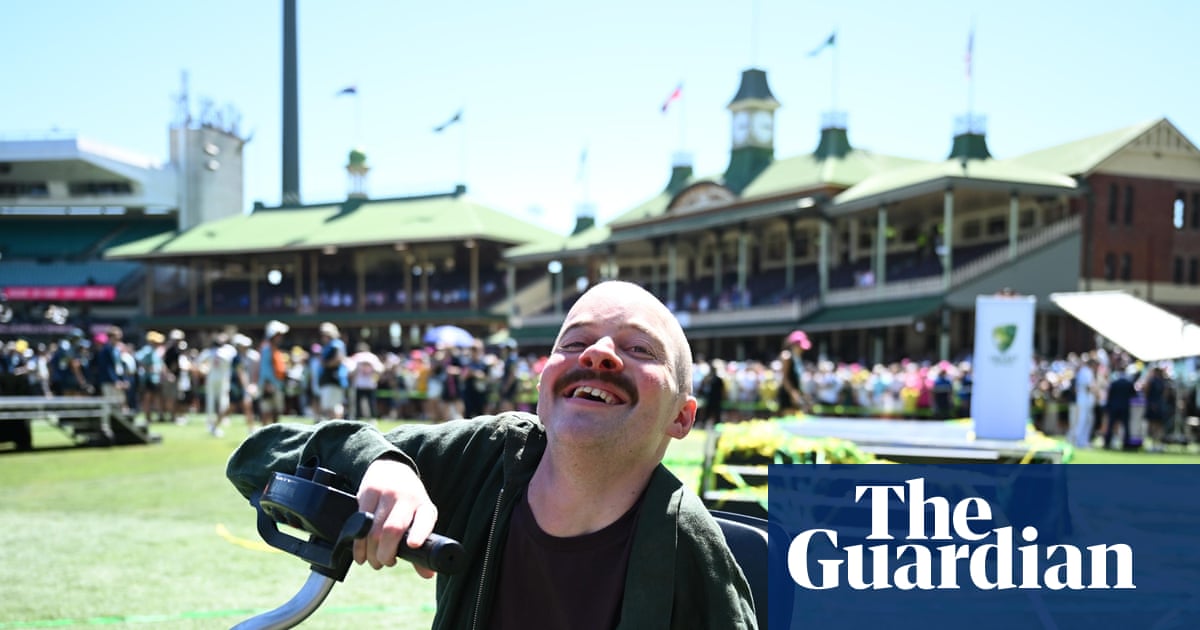
Xabi Alonso’s flexibility wasn’t enough to beat Barcelona, but it’s saved him at Real Madrid

Real Madrid hiring Xabi Alonso last May was widely seen as a quite radical approach for the La Liga giants — bringing in one of Europe’s most forward-thinking young coaches, a tactical mind with fresh, modern, complex ideas about how the game should be played.Almost eight months later, Alonso has shown himself to be much more pragmatic than it seemed at first, adapting to circumstances at the Bernabeu to buy himself more time to eventually build the type of team he ideally wants.This pragmatism was clear in the tactical setup for Sunday’s Supercopa de Espana final against rivals Barcelona, when Alonso changed his team shape from its previous 4-3-3 and used a flexible system that featured a five-strong back line when defending.It seemed like an acknowledgement that Alonso’s team could not look to dominate possession and territory against Hansi Flick’s Barca, and an acceptance that the Madrid boss had to mould his ideas to the players he had available for the game.Through his long playing career, Alonso worked with many of the top coaches of the past two decades and has always said he picked up a lot from all of them. At the moment, he is having to lean more on the practicality learned playing for Madrid under Jose Mourinho than the philosophical idealism of Guardiola, picked up at Bayern Munich.Alonso’s defensive setup was in some ways reminiscent of his own playing days under Mourinho at the Bernabeu, when the team learned to sit deep and stifle Guardiola’s tiki-taka Barcelona side.It came after Thursday’s 2-1 Supercopa semi-final win against Atletico Madrid, when the side’s football had again been very disjointed and scrappy, especially in midfield, and they relied heavily on goalkeeper Thibaut Courtois.At previous club Bayer Leverkusen, Alonso made his name as a coach by quickly implementing a high-tempo, high-pressing, cutting-edge vertical style, which won both trophies and plaudits. However, he also adapted and evolved his ideas and often prepared specific game plans for the biggest tests, especially when facing Bundesliga giants Bayern Munich.Alonso’s game plan for his first final as Real Madrid manager arguably worked quite well. Barca were big favourites coming into Sunday’s game, but it was an even contest over the 90 minutes. The Catalan team took the trophy thanks to Raphinha’s late deflected winning goal, but Madrid’s Alvaro Carreras and Raul Asencio missed clear chances in added time for an equaliser.“Losing in any way hurts,” Alonso said on Movistar TV afterwards. “But we were very competitive, worked very hard, and it was very tight. They had some luck with their goal; we were close to equalising, but it was not to be. In the end, you have to congratulate Barcelona and move on as quickly as possible, try and get players back, improve our spirits, and move on.”Madrid president Florentino Perez is known to have doubts about whether Alonso is the right coach for the club, and the all-powerful Bernabeu chief did not look happy as he stood by the podium as Barcelona’s players and staff went up to receive their medals and celebrate with the Supercopa trophy on Sunday evening.Sources familiar with the club hierarchy told The Athletic afterwards — speaking anonymously to protect their relationships, like all consulted for this article — that Alonso’s job was likely safe, for the moment at least.But the continuing question at the club, dating back to the end of predecessor Carlo Ancelotti’s time, is whether the current squad has the right balance and quality to be really competitive at the very top level, whoever is the coach.Madrid knew last year they needed to remake their defensive line, and over €120million (£104m; $140m) was spent last summer to sign Carreras, Dean Huijsen and Trent Alexander-Arnold. Only Carreras has been a success so far. Huijsen and Alexander-Arnold have had regular fitness issues, while injuries have also affected club captain Dani Carvajal and centre-backs Eder Militao and Antonio Rudiger.Of these, only Huijsen and Carreras were available against Barcelona on Sunday, contributing to Alonso’s decision to tweak his formation and have a five-strong back line when defending.It worked in some moments, but Huijsen was arguably at fault for Robert Lewandowski’s goal to put Barca 2-1 ahead, while home-grown Asencio was also at least partly to blame for both of Raphinha’s strikes.The Bernabeu decision makers have also not replaced the midfield playmaking skills lost through the departures of Toni Kroos and Luka Modric. That makes it more difficult for the team to control possession and territory the way that Alonso would ideally like, even against mid-range opposition in La Liga or the Champions League, never mind a Clasico against an in-form Barca.Meanwhile, all of Madrid’s top attackers are very similar players. Kylian Mbappe, Vinicius Junior and Rodrygo are all most comfortable starting on the left and attacking the penalty area from deep. The knee issue that kept Mbappe on the bench for Sunday’s game meant Alonso started the much more hardworking traditional centre-forward Gonzalo Garcia, and allowed more freedom for Vinicius Jr on and off the ball.Back in the autumn, it seemed that trying to force his ideas onto the squad was going to end badly for Alonso. It is now clear that he has accepted that some of what he wanted to do was unrealistic at the Bernabeu, as evidenced by his scaling back of the video analysis and individual tactical instruction his Galactico attackers were expected to take on board.“The Xabi who arrived in June is not the same as today,” the 44-year-old said in mid-December. “I’ve learned things and adjusted myself, got to know things, adapted. The players, too. It’s a process. We’re always evolving.”Multiple sources close to the Madrid dressing room told The Athletic on Sunday night that the team’s style of play had not been what is usually expected in a Clasico, with one comparing the game plan to that of “a small team like Getafe at the Bernabeu”.But lately, many players have firmly backed their coach publicly, and after the issues through the autumn when it seemed various big names in the dressing room were unhappy with Alonso, Madrid’s recent displays have suggested that all the top stars are playing for him.Vinicius Jr ended his 16-game goalscoring drought with a super solo goal on Sunday, and it at least looks like the issues between the Brazilian and his coach have been put to the side, if not fully resolved.Alonso’s challenge remains to sort out all of the problems in the squad, get his best players back fit and organised into a shape that can challenge in La Liga, the Copa del Rey and the Champions League.“Losing a final against your rival is never pleasant,” Courtois told Movistar TV after the game. “We’re sad today, but tomorrow we’ll get back to work. Today we showed that we’re alive as a team, especially in the second half. I’m sure we’ll win something.”Whether Madrid do win something this year remains to be seen, but Alonso’s pragmatism and acceptance of the reality of the challenge he faces have kept him in the job so far.It also gives his team at least a chance of winning the trophy he probably needs to get a second season in charge at the Bernabeu.


.jpg)
Most Popular



BBL 2025-26: Match 33, THU vs REN Match Prediction
13 hours ago