The deal that cost father and son's lives in Burnden Park disaster
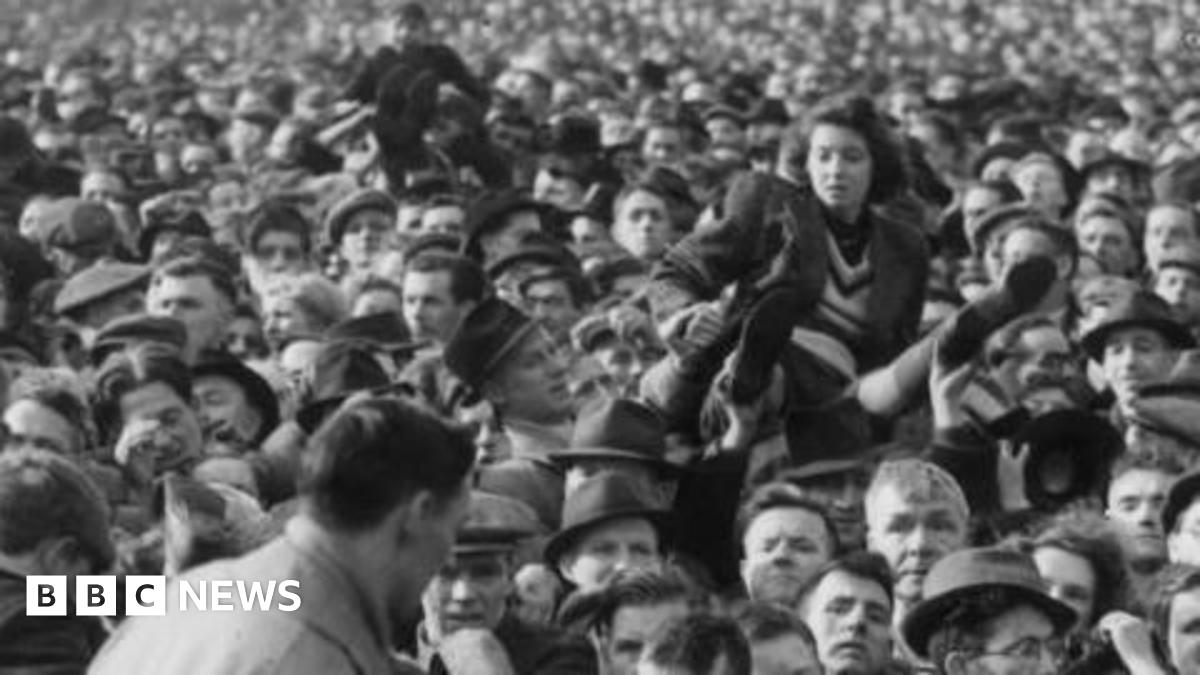
After living through World War Two, Richard Roby was desperate for a chance to see one of England's greatest footballers and persuaded his father to join him at a match that ultimately cost their lives.Richard, 37, had promised his dad Thomas, 67, he would offer him a hand on his allotment if they could go watch Stanley Matthews play for Stoke on 9 March 1946 against Bolton Wanderers at Burnden Park.But the agreement proved fatal, as the father and son from Billinge in St Helens, were among 33 people killed and 400 injured in the crush at the FA Cup tie.More than 85,000 people are thought to have poured into the 20,000 capacity ground for the FA Cup tie and a chance to see the star winger before disaster struck.Richard's granddaughter Susan Basnett said their deaths were "devastating and the family never got over it", with Thomas's widow dying two years later with "a broken heart"."It was ironic because they weren't going to go to the match - my great granddad Thomas was busy working in his allotment."My granddad Richard was really keen to see Stanley Matthews play. So I think they made a deal that if they went together, Richard would help Thomas on his allotment the next day."Basnett said her mum, who was eight at the time, told her the family had waited for hours hoping they would be on the next bus to return from the ground."And of course, they didn't get off. Mum and my grandma stood there till it went dark and still no sign."Both her mother and grandmother suffered from dementia in later life but could always speak about the tragedy that blighted their lives.The disaster was commemorated in a memorial service organised by Bolton Wanderers on Monday."I do appreciate the fact that the football club and the wider community are still holding these memorial events because I don't think those 33 victims should ever be forgotten," Basnett, who lives in Lytham St Annes, said."Obviously you need to remember every tragedy and every football tragedy subsequently, don't you? But I think this one is the one that people forget. If they're going to forget one, it seems to be this one."Fans say those affected by the tragedy fell into two camps - those who always talked about it and those who never said a word.Mark Barnes, 60, whose grandfather Harry Needham was one of the victims, said his mother hardly ever spoke about her dad's death."I was 12 when I found out my granddad died at the disaster - I could never understand why my mum had a different name to my nan."She explained her mum's first husband died at the match and my nan remarried."When family members talked they would recall how people thought he went for a post-match pint but he never came home."I attended this year's service and for some reason it really hit me this time , externaleven though I have been to several down the years," Barnes said.He said one of the memorial services was special, as he got to meet Sir Stanley Matthews and who posed for a photo with his daughter.Barnes said: "He was a real gentleman - real old school - he had time for everyone and agreed to so many photos with the families of those who died."Unlike Hillsborough, the match continued despite the crush.It was a sight that had a profound effect on Matthews, who always made it his business to attend memorial events.The English game's first superstar also donated money to a disaster fund after the tragedy.He recalled years later in one of his autobiographies that rumours had reached the dressing room about the growing casualty list."Yet it was not until I was motoring home that evening that the shadow of grim disaster descended on me like a storm cloud," he wrote."In my mind I kept seeing body bags and was too distressed to even think about football…………..horror scenes still remain vivid in the mind's eye, the fog is in the throat and the pen wavers."Fans, many of whom had come just to see Matthews, had to use the same turnstiles for all sections of the stadium because parts were still closed after wartime requisition.The gates closed 20 minutes before kick-off as fans crammed into the ground where like the Ibrox disaster of 1971 terrace crush barriers folded.Some jumped over the wall to enter the ground which was a common part of terrace culture.Worse followed when a gate at the rear of the stand opened - some accounts say it was forced open by fans trying to enter while others claim a father picked open a lock from within to escape the crush with his son.Bradley-Green said: "I think the tragedies are very similar – the authorities were not prepared."It was very easy to blame the fans in the days when nobody would have questioned the authorities like we did after Hillsborough - Britain was a more deferential society."Like Hillsborough, the police put out their version and it was not challenged."

.jpg)
Most Popular