CHAN Roots Behind the Morocco-Senegal AFCON Final
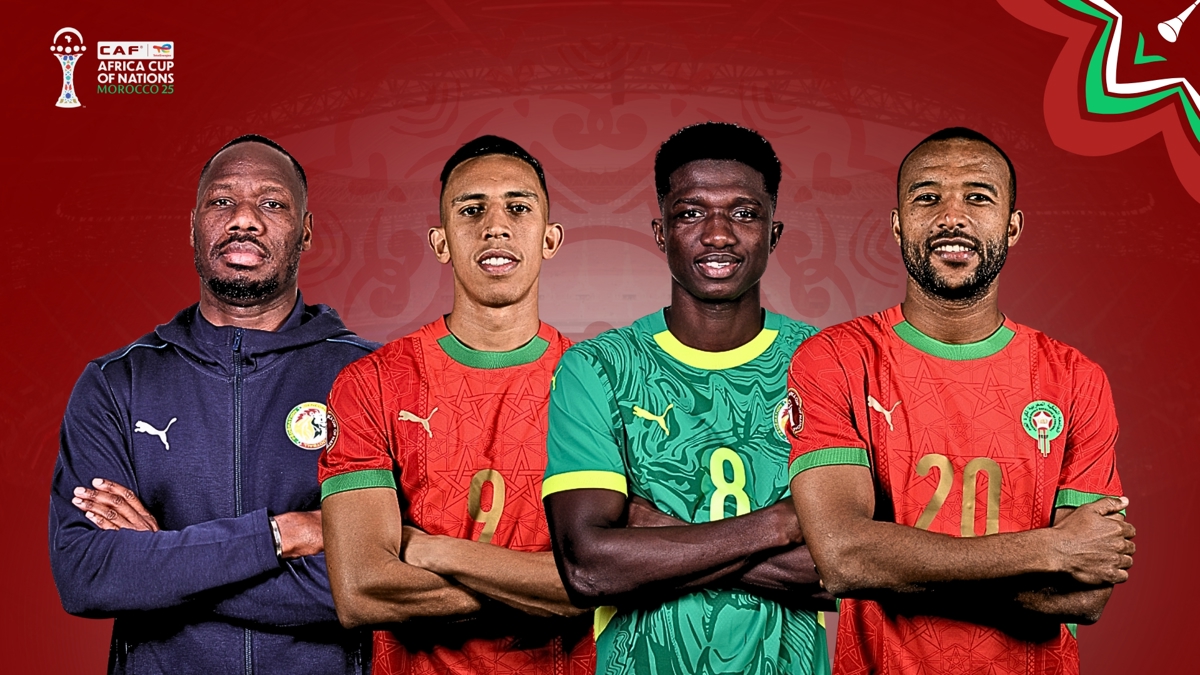
When Morocco and Senegal step onto the pitch to contest the final of the TotalEnergies CAF Africa Cup of Nations 2025, more than a continental title will be at stake. Beyond the prestige of the fixture and the magnitude of the occasion, another, subtler yet equally significant story will unfold — that of the TotalEnergies CAF African Nations Championship (CHAN).Long regarded as a developmental competition, the CHAN has gradually evolved into a true breeding ground for elite African football. The Morocco–Senegal final, scheduled for Sunday 18 January, bears the deep imprint of that journey. Several of the key figures in this decisive encounter first shaped their character, built their reputations, and launched their rise to the summit of African football through the CHAN.Ayoub El Kaabi, the ultimate symbolIt is impossible to tell this story without starting with Ayoub El Kaabi. The Moroccan striker is, in many ways, a living legend of the CHAN. A two-time winner of the competition in 2018 and 2020, he is also its all-time leading scorer with nine goals.Revealed to a wider audience during the 2018 edition, where he dominated the tournament, El Kaabi embodied the ideal pathway from domestic football to the highest international level. His presence in the AFCON 2025 final is a powerful reminder that the CHAN is not an end in itself, but a launching pad. Now Morocco’s leading attacking figure, he remains the clearest testament to the quality and potential of African domestic football.Soufiane Rahimi, excellence rewardedAlongside him, Soufiane Rahimi represents another Moroccan success story forged at the CHAN. During the 2020 edition, he excelled across the tournament, claiming both the Best Player award and the Golden Boot with five goals.His ability to shine in decisive moments, his football intelligence, and his strong sense of collective play left a lasting impression. In the AFCON 2025 final, Rahimi returns to a stage he knows well — one where talent alone is not enough, and where the capacity to deliver when history is being written truly matters.A Moroccan core shaped by the CHANThe depth of this Moroccan lineage is also evident in defence. Nayef Aguerd, who featured at the 2018 CHAN, learned the demands of top-level continental football there before establishing himself as one of Africa’s most reliable central defenders.Alongside him, Jawad El Yamiq, another CHAN product, embodies the continuity of a Moroccan model built on development, internal progression, and the promotion of local talent.More recently, El Mehdi Al Harrar, a winner of the CHAN 2025, continues this tradition. His inclusion in the AFCON finalist squad underlines Morocco’s view of the CHAN not as a secondary competition, but as a strategic pillar of its football project.Lamine Camara, Senegal’s rising gemOn the Senegalese side, the CHAN has also played a key role in the emergence of talents destined for the long term. Lamine Camara, winner of the CHAN 2022, was named Man of the Match in the final after impressing with his maturity, technical precision, and early leadership.Seeing him contest an AFCON final today is a natural progression. Like Morocco, Senegal has successfully used the CHAN as a platform to identify, refine, and prepare players capable of stepping up to the continental elite.Pape Thiaw, a coach bridging two worldsThe CHAN’s influence on this final is not limited to the players. It is also evident on the touchline. Pape Thiaw makes history as the first coach to reach a CHAN final and an AFCON final.This unique journey perfectly illustrates the complementarity between the two competitions. The Senegalese coach has successfully transferred the discipline, collective spirit, and high standards of the CHAN to Africa’s highest level. His path highlights a reality often overlooked: the CHAN is also a vital development platform for coaches — a space for tactical, managerial, and human growth.

.jpg)
Most Popular

BBL finals schedule 2026
8 hours ago