The Hundred: Grace Ballinger on being part of the competition's player auction
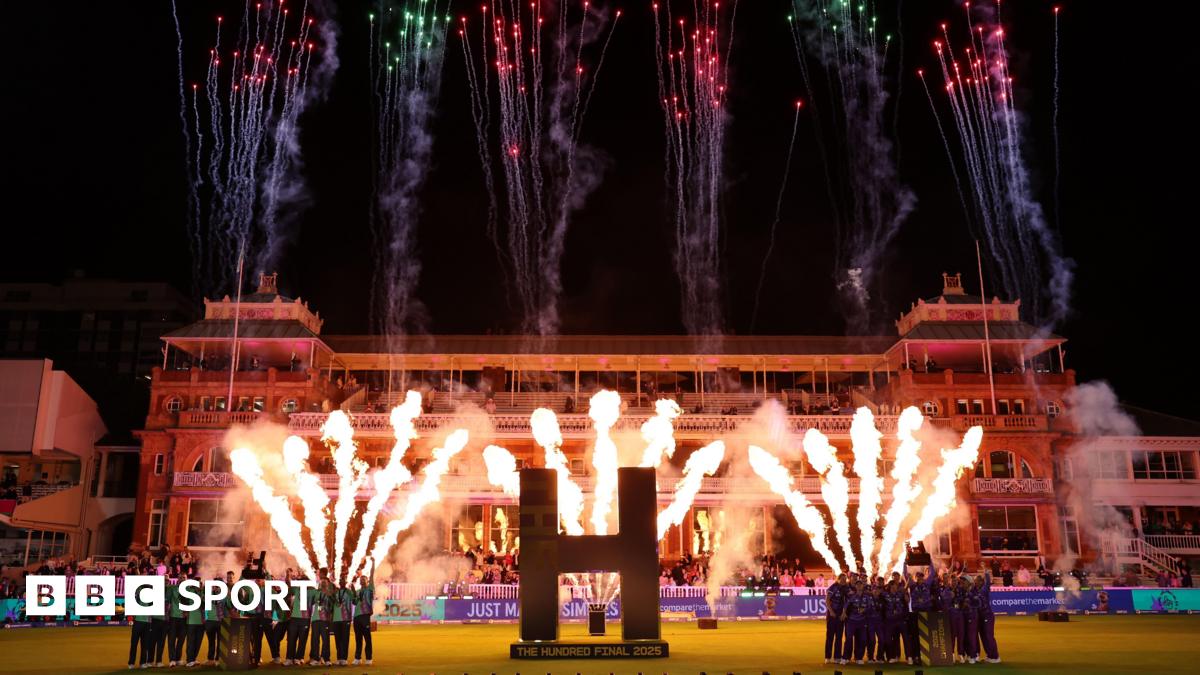
The prospect of earning over your annual domestic wage in a 23-day franchise competition is now very real for many English cricketers.Yet there are many unknowns for the domestic player who hopes to play in The Hundred this summer.The Hundred has divided fan opinion since its conception in 2021.Some oppose the unconventional format, others enjoy its short and flashy nature - it' is not just cricket, it is a highly marketable spectacle.Simplified rules, fireworks, and DJ's provide the crowd with entertainment.And after all, professional sport is well within the entertainment industry.While some remain unconvinced, it is inarguable that it has drawn in a new generation of cricket fans and revolutionised the female domestic game.Last year, the women's final had a record-breaking attendance of over 22,000.After five years of the competition, private investment has been introduced for the first time for the 2026 edition.This investment marks a new era, and with it comes colossal change.The eight counties that host a Hundred franchise had the option to sell shares of their team.Five opted to sell 49% shares, with the other three selling shares of 50% (Welsh Fire), 70% (Manchester Super Giants), and finally Yorkshire all 100% to the group behind IPL team Sunrisers Hyderabad (Sunrisers Leeds.)Changes in ownership and branding are explicit. More implicit, however, is the uncertainty which lies within every aspect of these new beginnings for the players.Significant movement is expected between teams. In 2025, men's sides could retain 10 players from their 2024 squad, whilst women's teams could retain eight.For this edition, only four direct signings or retentions per squad have been permitted.Squads that have been carefully curated and perfected over previous seasons will be entirely reconstructed.As opposed to a draft, which has previously been the method of selection for non-retained players, this year there will be an auction.The Hundred auction will be the first in any professional sporting competition in the United Kingdom.With this comes a lot of excitement and anticipation, but also a good deal of uncertainty for many.Within this auction, players have lost autonomy. Unless already signed, you have no say in where you end up out of the eight teams.Once you have signed for this franchise - they essentially 'own' you in The Hundred for up to three years.Previously players could reject retention for want of better playing opportunities, more money, or a different location, but team ownership can now opt to keep you in their hands for a maximum of three years, on your original salary - whether you like it or not.Not all uncertainty is negative.In many ways this new beginning will have an excellent impact on cricket in England and Wales.Privatisation of The Hundred has already generated £520m for the game, around £45m of which has been promised to be invested in grassroots cricket.All 18 counties also received a significant sum of money to fuel the domestic game. This investment is expected to save as many as six counties from financial collapse,, external according to the Leonard Curtis Cricket Finance Report.Salary pots have also grown significantly - the women's pot has doubled from 2025, and now sits at £880,000, while the men's pot has seen a 45% increase to £2.05m.The prospect of earning over your annual domestic wage for less than a month's work is now very real for many English cricketers, particularly in the female game.Out of those already signed, the highest English earners have been bought for staggering amounts.England men's white-ball captain Harry Brook will earn £465,000 for the month-long tournament, while women's international mainstays Nat Sciver-Brunt and Lauren Bell have been paid £140,000 each.It is less simple for players in the auction, who have been tasked with valuing themselves at a reserve price. This is the minimum you are willing to be sold for.If multiple teams then wish to enter a bidding war for a certain player, their wage will increase incrementally per bid.In the women's competition, the bands sit at £15,000, £27,500, £37,500, and £50,000.The men's bands start at £31,000, before increasing to £50,000, £75,000, and £100,000.Valuing yourself at the correct price can be somewhat difficult when the competition has essentially been reborn - salaries from previous years are not comparable, and since this auction is the first of its kind, nobody really knows how it will play out.Players will know their fate soon enough, with the inaugural auctions being held on 11 March (women's) and 12 March (men's), characteristically hosted at the iconic Piccadilly Lights in central London.A decision has to be made to price yourself at what you believe reflects your minimum value in this new context.Value yourself too low, and you could be stuck on a 'low' salary for a maximum of three years.Value yourself too high, and risk missing out completely - going unsold.When players are dealing with such significant amounts of money in comparison to annual salaries, pricing yourself out could not only be financially catastrophic, but also mean you miss out on the experience of being part of The Hundred, which engulfs English cricket for a significant part of the summer.Strategy may differ for male and female domestic players.While for both genders the squad size is the same (16-18 players per team, including four overseas,) the men's pool is far larger, with 710 players (including overseas) submitting themselves for the longlist.In the women's longlist there is just 254 players.The talent pool is far larger in the men's game. Selection in a men's Hundred squad is difficult and many very talented domestic players will go unsold.For the women, you are far more likely to be picked up, so there could be less risk in setting a base price.We have already seen significant movement through the direct signings.Team dynamics, which many successful Hundred teams have been building for years, could be entirely altered.Players will be able to watch themselves go on sale through the live-streamed auctions, which could take up to eight hours.Nobody can say for sure how this new dawn of the Hundred, which runs from 21 July-12 August, will play out.Will the privatisation of The Hundred, and the huge financial gain it has already bought in for all 18 counties, benefit English cricket at all levels?

.jpg)
Most Popular