
Hirving 'Chucky' Lozano was meant to define San Diego FC - instead, he leaves as a costly mistake
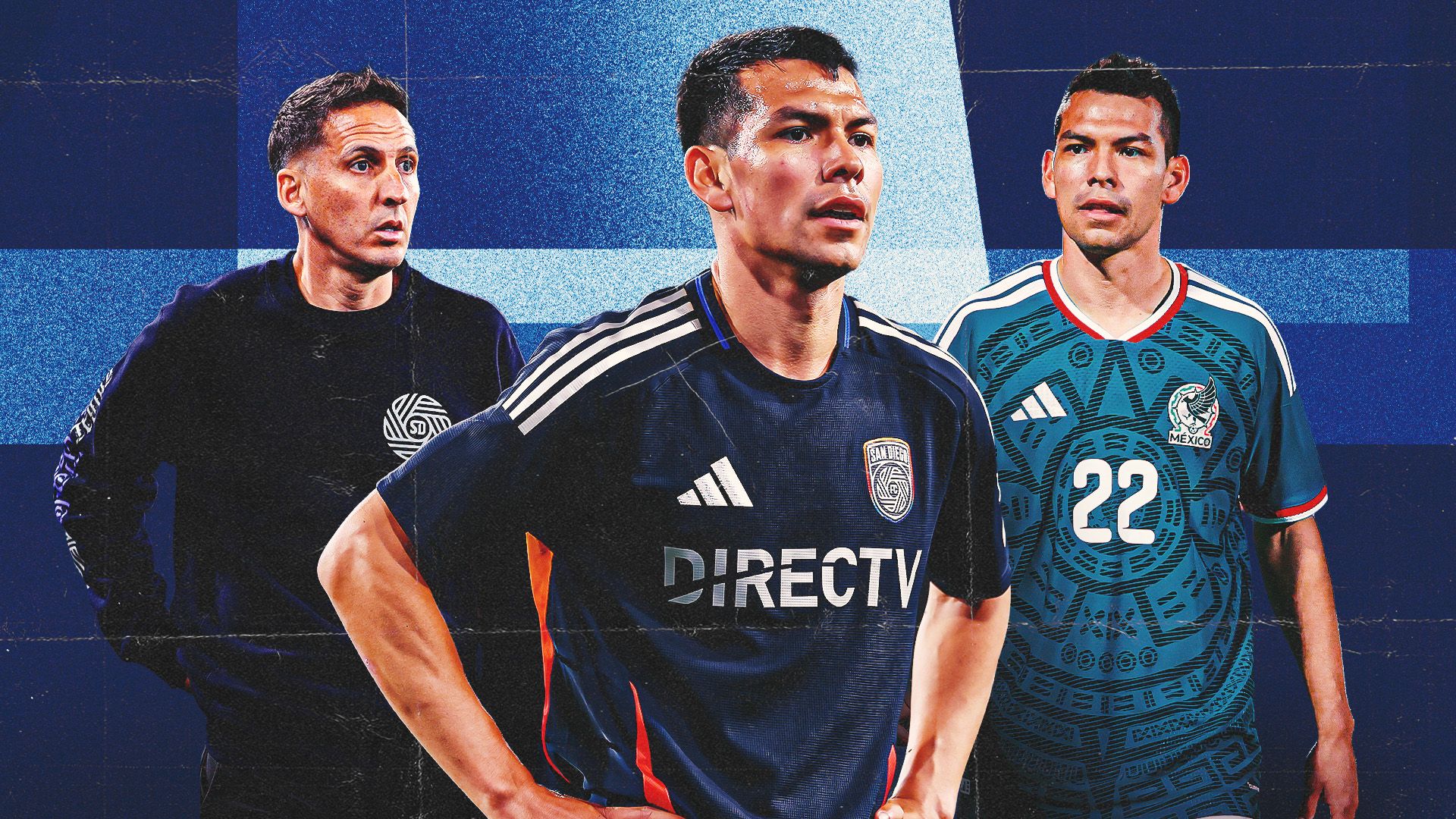
Lozano's signing, at the time, made total sense. Every MLS club in a new market needs a major player these days. The league is high-profile enough so that casuals can engage, but brand new teams? They need a star man to stick. And Lozano was a perfect one for the Southern California club. Here was a very popular Mexican footballer leaving Europe, when he still had plenty of quality, to open a bumper contract with an MLS club.San Diego is not exactly renowned for die-hard sports fandom or unwavering loyalty to its local teams. But Lozano’s star power had the potential to change that. Snapdragon Stadium sits less than 30 miles from the Mexican border, and there is a long-established tradition of Mexican-American fans crossing into Tijuana for Liga MX matches. For an expansion franchise, the brief was clear: land a star with name recognition and plenty of soccer left in him.In many ways, the approach echoed Carlos Vela’s move to LAFC - a deal negotiated by Tom Penn, now San Diego FC’s CEO, nearly a decade earlier. That model worked brilliantly in Los Angeles. There was hope it could do the same in San Diego.And for a while, it did. Lozano started from the off, assisted in the first game, and steadily produced throughout the season. He was one of three San Diego players to be named an MLS All-Star. Ironically, the only clubs he failed to deliver against were Mexican ones in Leagues Cup, where an otherwise excellent San Diego struggled. By the time the ill-fated game against Houston came, on Oct. 4, Lozano had an agreeable 17 goal contributions to his name.Yet his fallout hit hard. Not on the field, of course. San Diego were perfectly fine without Lozano. And even if he did provide three goal contributions in four playoff games, rookie head coach Varas made it clear in the selection alone that Lozano wasn't essential to the cause. Certainly, player for player, Lozano is an immense upgrade on 35-year-old Amahl Pellegrino. But San Diego were functional without him, relying instead on a fine cast of youth and the excellent Anders Dreyer - who quietly enjoyed one of the better seasons in MLS history (and would have certainly been MVP in a Lionel Messi-less league).Still, it is impossible to shake the fact that designated players are expensive and very difficult to move for a good price. Lozano was the fifth highest earner in MLS, raking in $7.6m for his efforts. San Diego paid $12 million to PSV to make him their first signing in a blockbuster move. Here was the guy who could offer a bit of extra edge, make a good team better, and sell a few kits. Lozano is a sexy signing who is supposed to make fans want to watch.Yet, the inherent other side of the deal is that the player conducts himself well, and the coach integrates him into the team. The strange element of DP signings is that they are undisputed superstars. Everyone knows that they make more money than the rest of the team, and there is an inherent pressure to their job - beyond the remit of normal footballer.That is where the big swing went wrong.And when it became clear that the unspoken agreement of good decorum and the right kind of behavior was no longer in place, Varas made a decision. It is interesting, in that light, that it is Lozano who is moving on, and not the head coach. These sorts of conflicts, between young managers and established stars, tend to go one way: with the man in the dugout losing his job, and the more problematic presence sticking around. In effect, it might have been easier for San Diego to get rid of Varas.Yet the former USMNT interim manager handled the job expertly. While there was plenty of rumor and hearsay around Lozano's antics, none of it really ever got out. Varas batted away questions like a pro. Statements such as "we are handling it internally" don't play well on social media feeds, but that's the point. Those are the kind of sentiments that keep coaches employed.It helps, of course, that Varas proved to be a truly excellent coach in his first year on the job. He worked his way through injury, navigated locker room discontent, and fought against perception around expansion franchises to piece together a very good and highly watchable side. Expansion franchises are supposed to struggle. San Diego had a small squad with plenty of question marks and made it to the conference finals. These things are not supposed to happen.Heaps has insisted that it is the right time for Lozano to go. It is time for things to reset."We believe that a sale is the best for all parties. Look, we really appreciate Hirving's contributions, what he was able to contribute last year, but as the season went on, I think from a style-of-play fit, as well as an environment, we think that it's best for both parties to find a new solution," he said on Friday.While there is something to be said for realizing that he should be moved on, getting rid of Lozano, though, might not be so simple. He is under contract until 2028, with a club option for two more years. The upshot is that San Diego aren't in a terrific negotiating position here. They will be unlikely to sell him for a profit. In fact, it would seem tricky for them to get much of a return at all. There are certainly few - if any - clubs in MLS that would be willing to match his salary. The most likely options, for now at least, are either Liga MX or a loan where his new club pays a small but not insignificant sum of his salary.Heaps refused to commit to a loan or permanent deal."At the moment, we're open to anything," he said.Of course, at some point, he will leave. Where he plays next is hard to determine. There will be discussion, talk, rumors, and, eventually, a deal. Lozano wants to play in the World Cup, and has been selected to a number of Mexico squads over the last 12 months. He will be playing football somewhere else soon.San Diego, meanwhile, have pledged to return to the market for a new Designated Player. On paper, the expectation is obvious: a dynamic attacking presence, another level-raiser in the mold of Lozano. The challenge, however, is that they may have already had the ideal fit.Lozano made sense not only as a footballer but as a market-defining signing. He sold the fourth-most jerseys in MLS in 2025 and helped energize San Diego’s sizable Mexican-American population. Roughly 30 percent of the city’s population identifies as Hispanic, with a significant portion of that community tracing its roots to Mexico. For many supporters, Lozano was the primary reason to engage with the club in its infancy.That effect cannot be replaced. It is unlikely San Diego would be able to find a similar player who currently stars on the Mexico national team. There is, as the popular San Diego chant goes, only one Chucky Lozano. So, the onus is on San Diego to get smart. Heaps has proven to be an apt dealmaker capable of finding talent on the cheap. San Diego have also made fine use of their connections to the Right to Dream academy. There must also be some encouragement to be drawn that German national team stalwart Timo Werner is close to reportedly wrapping up a deal with the San Jose Earthquakes. Players will want to come to America ahead of the 2025 World Cup. Right now, San Diego need to find the right one - for both on and off the field.


.jpg)
Most Popular



Dual Season Starts With UC Davis
15 hours ago



Asian Games 2026 cricket schedule
10 hours ago