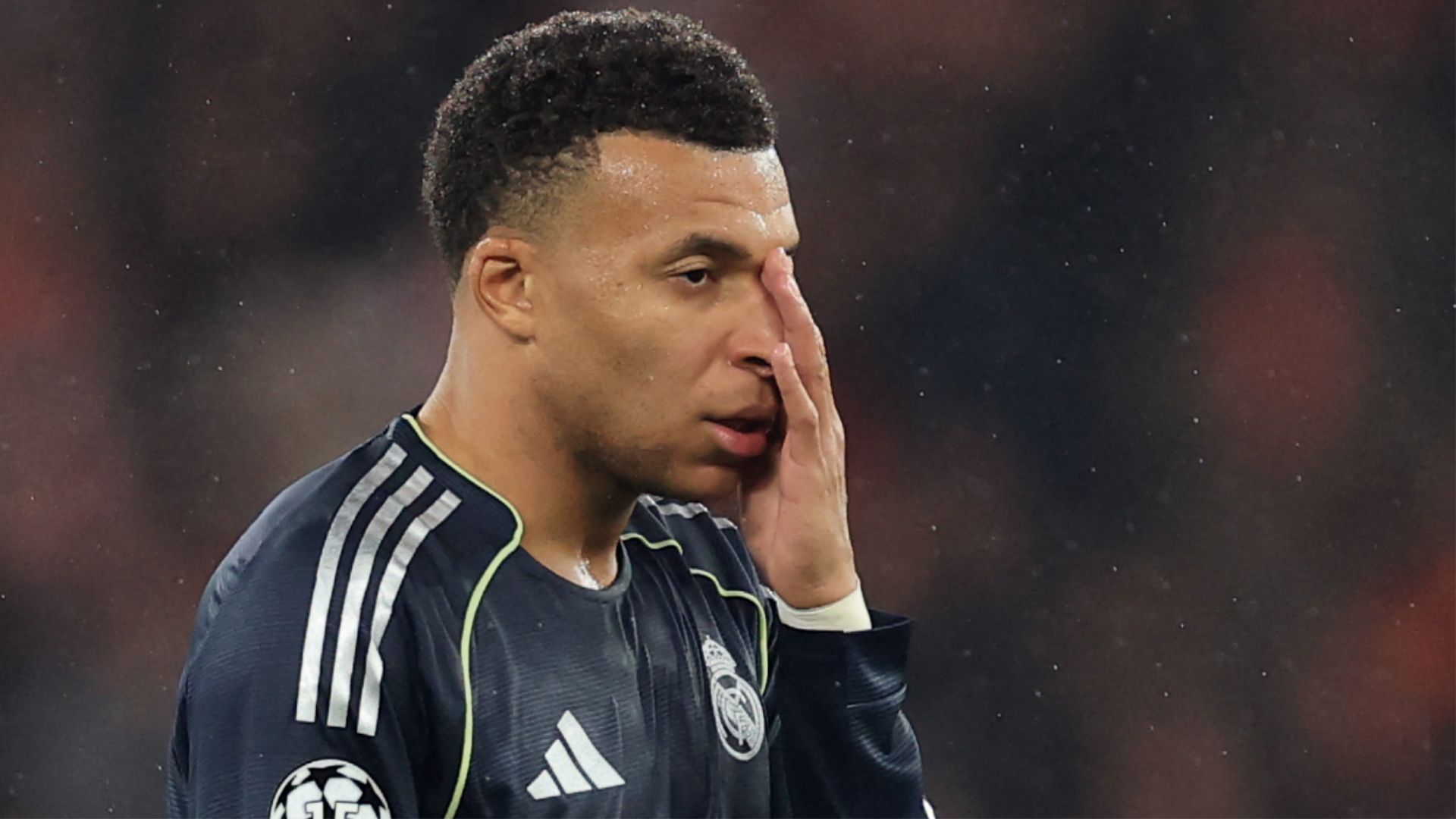
Iga Świątek’s tennis quandary and the puzzle of being caught between two styles

Welcome back to the Monday Tennis Briefing, where The Athletic will explain the stories behind the stories from the past week on court.This week, a paradox returned, doubles reigned supreme, and that early-season puzzle needed to be solved.If you’d like to follow our fantastic tennis coverage, click here.A hinge moment for a generational talent?After two years in which Iga Świątek ruled the United Cup for Poland but missed out on the title, the third time was the charm — and her teammates got her over the line.After two round-robin wins, the six-time Grand Slam champion lost her singles rubbers in the semifinal and final to Coco Gauff of the U.S. and Belinda Bencic of Switzerland respectively. But Hubert Hurkacz in men’s singles, and Jan Zieliński and Katarzyna Kawa in mixed doubles, secured 2-1 victories in both ties by winning their matches, delivering under pressure.Świątek, who last year won Wimbledon and secured her position as the current greatest player since Serena Williams, faced two on-fire opponents in those losses. There is a lot of tennis to be played this year, but she is unequivocal about what she wants to do with coach Wim Fissette: bring back the aggressive, counterpunching style that defined her first years of dominance on the WTA Tour, to replace the all-out aggression instilled by Tomasz Wiktorowski, with whom she won four majors. Thanks to a rising women’s tennis field, that style no longer works, and Świątek and Fissette have recognized that.But in 2025, during an interview with The Athletic and in several news conferences, Świątek kept finding herself caught between the two competing intuitions. When under pressure during matches, she would retreat into the ingrained habits that she is trying to break, sometimes playing both styles in the same match or even set.When the ball comes back hard and her response is to hit it harder, the errors flow and the stress of knowing what to do, but not being able to do it, becomes visible. Matches run away from her. The process of unlearning is similar to that which Aryna Sabalenka went through and Gauff is going through on serve, but unlearning a mindset — especially one that used to be successful — and the patterns of play tied to it, is even harder.It is also harder for fans to compute than difficulty with one skill, because sometimes the way Świątek and Fissette want to play works for extended periods of time. And then, it doesn’t.“I kind of knew what I was doing wrong. I don’t know, I was stuck in doing it wrong rather than actually solving it,” the 24-year-old said after a loss to Emma Navarro at last year’s China Open that hewed to that pattern.This shift is especially visible in her matchup with Gauff, which Świątek leads 11-5. Gauff has won their past four meetings, all in straight sets. She has improved since those earlier meetings, mostly played when Świątek was dominating the tour, but the on-court dynamics have also changed. Previously, Świątek’s controlled aggressiveness made Gauff take risks and did not let her redirect pace. More recently, Świątek’s over-aggressiveness has shrunk her margins and let Gauff inhabit the retrieve-and-redirect role she does better than just about anyone.Even when changing styles in real time, in 2025 Świątek won a Grand Slam title, a WTA 1000 title, and finished nearly 2,000 points ahead of No. 3 in the rankings. At Wimbledon, her serve acted as a release valve and let her settle into her baseline game. It has not done that of late, winning very few free points, and making it more potent may be key to making progress in this evolution that Świątek knows means more than a couple of matches — and even the United Cup she craved for her country.“I see my game every day,” she said during the interview last year. “It’s hard to see the changes because they’re little. I know. They only seem big on a bigger horizon.”How did Ukrainian women’s tennis make another statement?Before a ball had been struck during the Brisbane International final between world No. 1 Aryna Sabalenka and then-world No. 26 Marta Kostyuk, attention was on the trophy presentation speeches. Kostyuk, like the other Ukrainians on the WTA Tour, has declined to shake hands with players from Russia or Belarus since Russia’s invasion of Ukraine in 2022.There was added tension from a misleadingly edited interview with Kostyuk last year, in which she had apparently referenced “testosterone” in answering a question about whether Sabalenka and Świątek intimidated her. The question had not in fact been asked.But after Sabalenka’s 6-4, 6-3 win, it was Kostyuk’s words for her country that stood out.“I play every day with pain in my heart. There are thousands of people who are without light and warm water right now. It’s -20 degrees outside. It’s very painful to live this reality every day. My sister is sleeping under three blankets because of how cold it is at home. I was incredibly moved and happy to see so many Ukrainian flags this week,” she said.Kostyuk spoke through her play, too, beating three top-10 players (Amanda Anisimova, Mirra Andreeva, and Jessica Pegula) to reach the final. She won just one match against a top-10 player all season in 2025.In Auckland, New Zealand, Elina Svitolina, the highest-ranked Ukrainian, made her own statement by winning the Auckland Open. The world No. 12 ended her 2025 season early, describing herself as “not in the right emotional space” in a social media post toward the end of September. That followed a narrow, emotional loss to Jasmine Paolini of Italy when representing Ukraine in the Billie Jean King Cup Finals.Svitolina returned to the WTA Tour with a title, beating Wang Xinyu of China 6-3, 7-6(6) in the final.“It feels amazing to win another title, especially after a not very pleasant end of the year for me. That break really helped me to regroup and come back with a new energy,” Svitolina said during her on-court interview.“Sometimes it’s not easy to stop the season early, but sometimes you need to make one step back to make two, three steps forward,” she said.Whether speaking personally or for their country, Ukraine’s players are meeting their challenges on the court to start the year.How Carlos Alcaraz and Jannik Sinner proved that exhibitions can be goodStars jetting off to do exhibitions mid-season can provoke eyerolls from many in the sport. How can these players complain about a packed schedule and then be happy totake a fat check to play yet another match, the argument tends to go — even when the players themselves say that the intensity is just not comparable.Saturday’s match between Carlos Alcaraz and Jannik Sinner in Incheon, South Korea, seemed to leave everyone happy. The two avatars of men’s tennis, who are odds on to meet in the Australian Open final in three weeks’ time, did not offer any kind of dress rehearsal. They explored every angle of the court. They hit slice rallies. They played up to the exercise in joviality that an exhibition should represent, before slapping away a vicious winner to remind each other of their prowess.Other than a hugely lucrative appearance fee, there was clearly a lot of enjoyment to be found in playing a match against each other away from the suffocating pressure of a big final. Both players grinned throughout, and even slapped hands after some of the more ludicrous points. Alcaraz ended up winning 7-5, 7-6(6), but the result was the least important thing of all.South Korea doesn’t have an ATP Tour tournament, and so this was a rare chance for tennis fans there to watch leading male players. None of the 12,000 present would have left disappointed, especially the young boy who Sinner invited onto the court to take his place for a couple of points at the start of the second set. When the boy won a point with a forehand winner, there was the biggest noise of the night.At the Australian Open, which begins Sunday, Alcaraz is bidding to become the youngest man ever to win the career Grand Slam, while Sinner is looking for a third straight title — and to reclaim the world No. 1 spot from the rival who, at least for a couple of hours Saturday, was just joining him in some fun.And what about the puzzle of early-season matches?Early-season tennis is compelling. It is also an exercise in puzzle-solving and counter-intuition. The players are fresh; the players are rusty. The Australian Open, the first Grand Slam of the year, is just a week away, so the matches feel consequential; the players are competing for the first time in over a month, so the matches do not feel consequential at all. The numbers next to the boldface names and up-and-coming players look like they promise upsets and routine wins; they are also ghosts of last year.Hurkacz played 26 matches in 2025 before having surgery on his right knee in June. He had torn a ligament in the same knee a year earlier. He returned for Poland at the United Cup and played to his career-high ranking of No. 6 despite being in the 80s, beating Alexander Zverev (No. 3) and Taylor Fritz (No. 9) as part of his country’s trophy run.Fritz discussed how right-knee tendinopathy curtailed his off-season, meaning that a long win against Jaume Munar of Spain, and defeats to Hurkacz and Stefanos Tsitsipas, were more valuable for just getting on court than they were for forecasting his year ahead.Tsitsipas had a dreadful 2025, but looked renewed in Australia. Gauff lost to Jéssica Bouzas Maneiro of Spain but beat Maria Sakkari and Świątek.On beaten finalist Switzerland’s team, Stan Wawrinka, at 40, played three-setters and tiebreaks like he was 25, while Bencic continued her remarkable 2025 form — and results for her country — by going 9-1 and returning to the WTA Tour top 10.Away from the United Cup, Svitolina rebounded from her difficult end to last season. Kostyuk came flying out of the gates, so, too, Sabalenka. Daniil Medvedev looked renewed in Hong Kong, where he won the title.Perhaps the most intriguing person in all this is Alexander Bublik, who moved into the top 10 for the first time after beating Lorenzo Musetti in the final of the Hong Kong Tennis Open. The Kazakh is one of the most mercurial players in the sport, but last year added more resolve than he has shown in the past few years to his undoubted talent. He is not afraid to ask the question that can haunt tennis players — and which haunts this part of the season.Does it mean anything?When asked about the upcoming first Grand Slam of the year, the players mostly had the same response: It’s a different tournament. See what happens. Early-season tennis is an exercise in provisionality and appreciating whatever happens.RALLY OF THE WEEKWith an honorable mention for Bublik’s slaloming against Musetti…This rally between Świątek and Lys was simply thrilling:🏆 The winners of the week🎾 ATP / WTA:🏆 Poland def. Switzerland 2-1 to win the United Cup (500) in Sydney. It is the country’s first United Cup win in three consecutive finals.🎾 ATP:🏆 Daniil Medvedev (1) def. Brandon Nakashima 6-2, 7-6(1) to win the Brisbane International (250) in Brisbane, Australia. It is his 23rd tour title.🏆 Alexander Bublik (2) def. Lorenzo Musetti (1) 7-6(2), 6-3 to win the Hong Kong Tennis Open (250) in Hong Kong. It is his ninth tour title.🎾 WTA:🏆 Aryna Sabalenka (1) def. Marta Kostyuk (16) 6-4, 6-3 to win the Brisbane International (500) in Brisbane, Australia. It is her third title there.🏆 Elina Svitolina (1) def. Wang Xinyu (7) 6-3, 7-6(6) to win the Auckland Open (250) in Auckland, New Zealand. It is her first title since April.📈📉 On the rise / Down the line📈 Wang Xinyu ascends 14 places from No. 57 to No. 43 after her run to the final of the Auckland Open.📈 Alexander Bublik moves up one place from No. 11 to No. 10, reaching the top 10 for the first time.📈 Iva Jović rises from No. 33 to No. 30, a new career-high ranking and inside the seeding cut-off for the Australian Open.📈 Alexander Blockx makes his top-100 debut, climbing 19 places from No. 115 to No. 96.📉 Corentin Moutet falls two places from No. 32 to No. 34, but remains seeded for the Australian Open due to injury withdrawals.📉 McCartney Kessler drops five places from No. 31 to No. 36, outside the Australian Open seeding cut-off.📉 Hamad Medjedovic tumbles 17 places from No. 80 to No. 97.📉 Yulia Putintseva descends 31 places from No. 74 to No. 105.📅 Coming up🎾 ATP📍Adelaide, Australia: Adelaide International (250) featuring Alejandro Davidovich Fokina, Tommy Paul, Stefanos Tsitsipas, Valentin Vacherot.📍Auckland, New Zealand: Auckland Open (250) featuring Ben Shelton, Casper Ruud, Alex Michelsen, Jakub Menšík.📺 UK: Sky Sports; U.S.: Tennis Channel 💻 Tennis TV🎾 WTA📍Adelaide, Australia: Adelaide International (500) featuring Madison Keys, Mirra Andreeva, Markéta Vondroušová , Victoria Mboko.📍Hobart, Tasmania: Hobart International (250) featuring Emma Raducanu, Venus Williams, Barbora Krejčíková, Iva Jović.📺 UK: Sky Sports; U.S.: Tennis ChannelTell us what you noticed this week in the comments below as the men’s and women’s tours continue.


.jpg)
Most Popular