With Disneyland as a role model and the Champions League in its sights: Why Como 1907 is the antithesis of RB Leipzig, despite investor funding
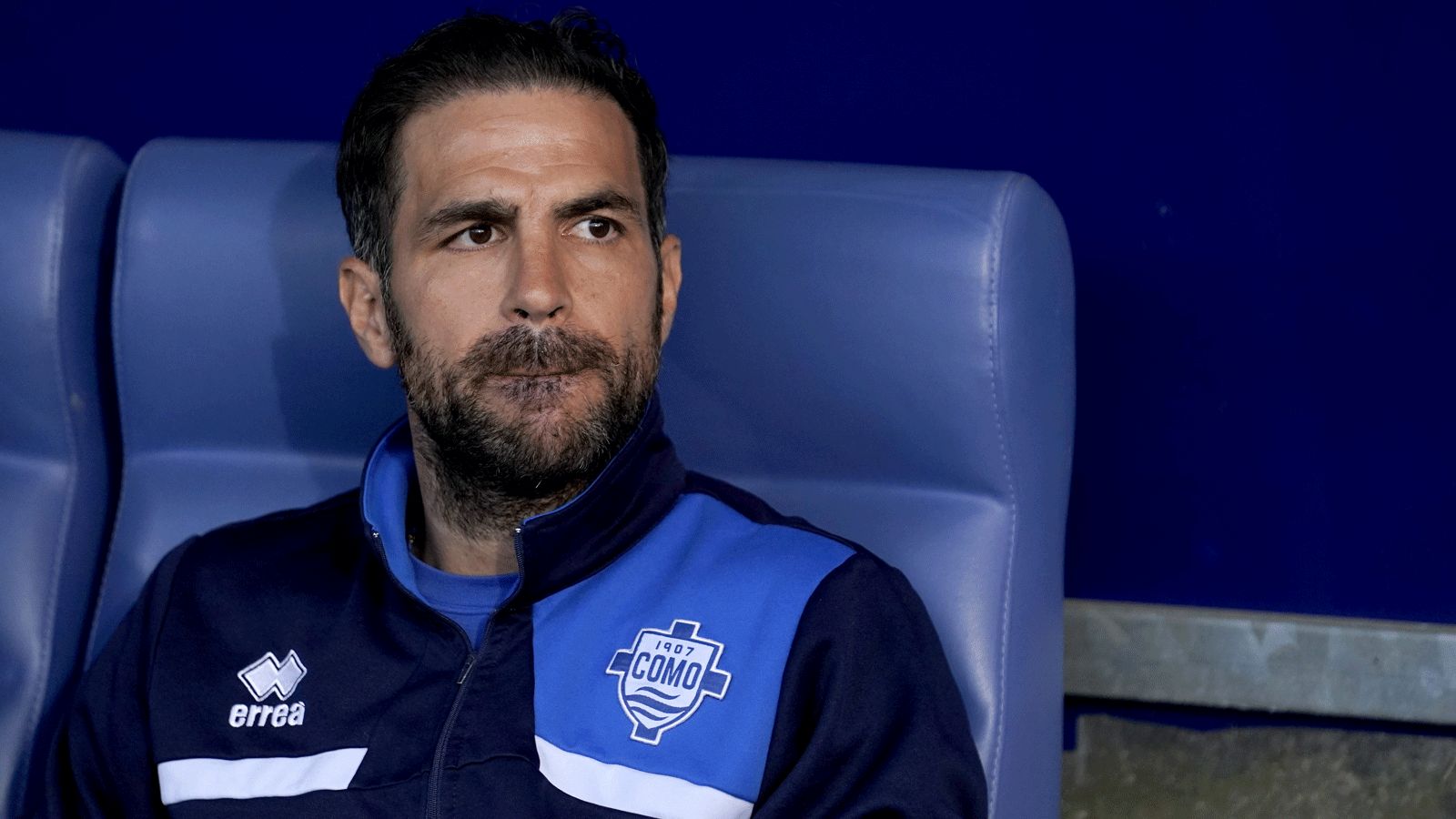
The fact that Como has achieved such a status is primarily thanks to the two brothers, Robert Budi Hartono and Michael Bambang Hartono, who passed away just last week. The Indonesian businessmen took over the club in 2019 through one of their holding companies for around €350,000 and, step by step, paved the way for it to make its mark on the world of football. After all, Como was by no means always a place where people dared to dream of the Champions League.In the 1980s, the club played in Serie A for five consecutive years, but since then, apart from the 2003/04 season, it has only competed in the second or third tiers. Following their last relegation from Serie A in 2004, the club was forced to file for bankruptcy; as a result of a second bankruptcy in 2016, Como was put up for auction. Initially, Akosua Puni Essien, the wife of Ghanaian international Michael Essien, purchased the club for €237,000, but was then forced to sell it again quickly due to renewed liquidity problems.Eventually, the Hartono brothers stepped in, joining the club through their entertainment agency Sent Entertainment Limited and, thanks to their estimated fortune of more than 40 billion US dollars, resolved all of Como’s financial problems. Following the takeover, the Hartonos cleared the debts of the then fourth-tier side and led them back to Serie A, where they are now among the league’s wealthiest owners.Since then, things have not only been steadily improving on the pitch; a lot has also happened off it. Former England international Dennis Wise was appointed managing director in 2021 and, until his departure in 2024, was given a free hand to reshape the club and build a competitive team.Thanks to the Hartono brothers’ contacts, Uber – a global heavyweight – was brought on board as the main sponsor for the 2024/25 season – the US company’s first involvement in Italian sport. In January 2025, the club entered into a strategic partnership with Ajax Amsterdam; prior to this, two sporting legends, Cesc Fàbregas and Thierry Henry, had already been recruited to the cause. The latter acts purely as a shareholder in Como, whilst Fàbregas initially played for the club for one season, then served as assistant manager and, since 2024, has been the club’s head coach.At the same time, Como and its owners are taking a long-term approach; they do not act like traditional investors, whose primary aim is to make as much money as possible for themselves by investing in a club. Rather, their goal is to benefit the club, the city, its residents and the local area as a whole. Whilst other traditional investor-owned clubs, such as RB Leipzig in Germany, ‘exploit’ football purely as a means of marketing their own products, Como pursues a more sustainable marketing strategy.This goes so far that, for example, every newborn in Como’s city hospitals receives a baby bodysuit from the club. Furthermore, the club collaborates with 14 local bars. Should the club win one of its competitive matches, a round of drinks is treated to the guests present. The aim is clear: to win over the local population and ensure that the Como project is perceived as an asset to the area rather than a disruptive factor.This also includes the expansion of the attractive home ground. The Stadio Giuseppe Sinigaglia, built in 1927, which is beautifully situated directly on Lake Como and offers a phenomenal view of the water alongside the action on the pitch, is currently still owned by the city of Como, but is set to be acquired and converted into club property sooner or later. Even after promotion in the summer of 2024, necessary renovation work had to be carried out on the almost 100-year-old arena; further developments are planned for the future, such as increasing the total capacity, which currently stands at just around 13,600 spectators.Disneyland is being taken as a model for further refurbishment work. According to the owners’ vision, the city, the region and the club are to be marketed as a single entity. The aim is a lakeside park with a modern stadium and entertainment facilities, even outside match days. “What the theme park is to Disney, the football club and the match-day experience are to us. We are fortunate to be in a place where the city itself is a brand: Lake Como is a global brand. It would be foolish not to seize this opportunity – to integrate football into the ecosystem, not as the centrepiece, but as a key element,” club president and Sent CEO Mirwan Suwarso told the Italian portal Calcio e Finanza.Following Disney’s model, Como 1907 is therefore not meant to be merely a nouveau riche football club, but a comprehensive and financially sustainable entertainment project – with the Lake Como tourism region as the overarching master brand. The aim is to combine football, marketing, merchandising and the region, attract celebrities and establish the club as a global brand with an experiential character.This is exciting because the contrasts could not be greater. On the one hand, there is the ‘traditional character’ of an idyllic small town with a perfect lakeside location; on the other, the owners’ grand, global ambitions.There is no doubt that this situation carries a real risk of alienation. Como no longer bears much resemblance to a traditional club from a small Italian town. The main language used on its social media profiles is English, and various meetings with club officials and representatives from Saudi Arabian clubs have caused confusion amongst some fans in the past.From a sporting perspective, it must also be noted that Como has done little to date for football in the region. Not a single player comes from the club’s own youth system; indeed, with reserve goalkeeper Mauro Vigorito and Edoardo Goldaniga, there are just two Italians in the squad.A statistic from Corriere dello Sport shows that, in the current season, an Italian player has been on the pitch for exactly one minute for manager Fabregas’s side: defender Goldaniga came on as a substitute in the closing stages of the 2-1 away win against Fiorentina in September, playing for 60 seconds. No other club has fielded players from their own country so rarely or in such small numbers – second-bottom in terms of minutes played by Italian players is bottom-of-the-table Hellas Verona with 4,137 minutes.

.jpg)
Most Popular