
Xabi Alonso’s sacking is the ultimate reminder that only Florentino Perez rules at Real Madrid

Real Madrid’s decision to sack Xabi Alonso as manager on Monday afternoon was simultaneously difficult to understand and no great surprise at all.Even allowing for the regular drama at the Bernabeu under all-powerful president Florentino Perez, the way Alonso was hired last May to lead a new era and now fired almost eight months later has been particularly chaotic and mystifying.Replacing Carlo Ancelotti on the Madrid bench before last summer’s Club World Cup, Alonso was backed by senior figures at the club to implement a version of the high-pressing, high-tempo style of play he implemented successfully during his time in charge of Bayer Leverkusen.Much of the club’s €180million (£155m, $210m) transfer spree last summer — such as the €62.5m spent on centre-back Dean Huijsen and €50m on left-back Alvaro Carreras — was to give the new coach young players who fit with his ideas about the game, profiles that were deemed to fit with the tactical and technical demands of today’s top-level football.The Madrid hierarchy was also in favour last summer of the idea of imposing more discipline and structure on the squad, especially bringing back into line the big-name individuals who, it was felt, had been allowed too much leeway during the low-key tail end of Ancelotti’s second spell last term.There was also a feeling that Alonso’s experience as a Madrid player (2009-2014), under Jose Mourinho and Ancelotti, would give him a valuable understanding of how to deal with the dressing room and the boardroom at the Bernabeu.The evidence of Alonso’s short time in charge shows that trying to impose a long-term project at Real Madrid is an almost impossible task for any coach — at least so long as Perez is president.The clearest example of this is how what should have been Alonso’s key early achievement as Madrid coach, October’s 2-1 home victory against Barcelona in La Liga, ended up being the obvious moment from which everything started to fall apart for him.Late in the second half, with Barca threatening an equaliser, Alonso removed Vinicius Junior as the Brazilian winger was not tracking back. The more defensively reliable Rodrygo was sent on instead to help protect his team’s narrow lead.That type of substitution makes sense in almost any other environment, but it turned out to be a huge mistake for Alonso. Already upset at what he believed was a pattern of unfair treatment from the manager, Vinicius Jr took the opportunity to publicly show his feelings against him.When the 25-year-old received no sanction from the club hierarchy, it confirmed to everyone around the Bernabeu that big-name players — and their entourages — could complain about the coach, or even defy him, without consequences.Speculation swirled around and the team’s performances dipped through a run of games that included Champions League defeats against Liverpool and Manchester City, the embarrassingly awful 2-0 league home loss to Celta Vigo, and the excruciatingly narrow 3-2 Copa del Rey win at third-tier Talavera de la Reina.In recent weeks, it seemed like Alonso had managed to steady things. He showed pragmatism in toning down his detailed instructions to players, and adapted his tactics to the point where they often played a counter-attacking game similar to how Ancelotti generally set the team up.The Bernabeu crowd appeared to be implicitly supporting the coach when Vinicius Jr and other underperforming players were whistled by fans during recent victories over Sevilla and Real Betis either side of the winter break.Even after Sunday’s narrow 3-2 Supercopa de Espana final defeat against Barcelona, it seemed (to some, at least) that Alonso had bought himself more time to build the type of team he wants. Many staff at the club, both those who work directly for Alonso and in other roles, also returned to Madrid after the match in Saudi Arabia, believing that a change of coach was not imminent.But at Real Madrid, the opinion of only one man ultimately counts: the president. Perez has given up very quickly on new managers before — Rafael Benitez lasted six months during the 2015-16 campaign, and Julen Lopetegui got just 14 games before the axe fell in the autumn of 2018.Alonso has not improved his reputation during his short time as Madrid coach, failing to get the team playing the way he wants. His reserved personality and technocratic approach led to issues with both the dressing room and the boardroom. He may also have regrets about allowing himself to drift away from his own convictions over recent months.It could also be argued that the first serious indications that Alonso might not last very long on the Bernabeu bench came before the team’s performances got really bad. As the coach’s fate hung by a thread through recent weeks, Perez never offered any public support at various speaking commitments, instead using them to rage against perceived enemies such as La Liga, UEFA and Barcelona.An indication of the type of challenge that faces any Madrid coach is the continuing turmoil within the Bernabeu fitness and medical staff. Alonso arrived with his own physical preparation specialist in Ismael Camenforte, but the club also insisted that long-time Perez favourite Antonio Pintus stay as ‘performance director’. Recent weeks also saw veteran doctor Niko Mihic return to a prominent role overseeing all medical matters, although Felipe Segura still officially heads that department within the club.Meanwhile, players continue to suffer debilitating injury issues, such as the knee problem that ruled Kylian out of last week’s Supercopa. The whole situation showed again how little power Madrid’s first-team coach often has over something that is so hugely important for success in his job.It might seem a crazy way to run a football club, but it is difficult to argue that it has not consistently brought results over the past 25 years, especially with seven of the club’s record 15 Champions League/European Cup trophies coming during Perez’s two terms as president (his first was 2000-2006).Alonso’s exit was quickly followed on Monday by another club statement saying that Alonso’s former team-mate Alvaro Arbeloa had been promoted from the reserve team to take over. It is expected that Pintus will also return to working with the players day-to-day at training.Arbeloa has shown through his career that he is a loyal club man who always backs the president firmly in public and enjoys taking on anti-Madridistas wherever they can be found. Whether the 42-year-old former Liverpool full-back can also organise a team to compete at the top level in club football remains to be seen.Ultimately, the past eight months have served as a reminder of just how unique Madrid is within world sport. Perhaps a ‘project’ manager like Alonso, who came in looking to impose his own ideas about the game, was always doomed to failure.Some around the Bernabeu say that Perez was never convinced about the idea of hiring him, which made it easy to get rid of him so quickly. Nobody should ever forget that coaches can come and go at the Bernabeu, but the president remains the ultimate boss.


.jpg)
Most Popular

Dual Season Starts With UC Davis
15 hours ago
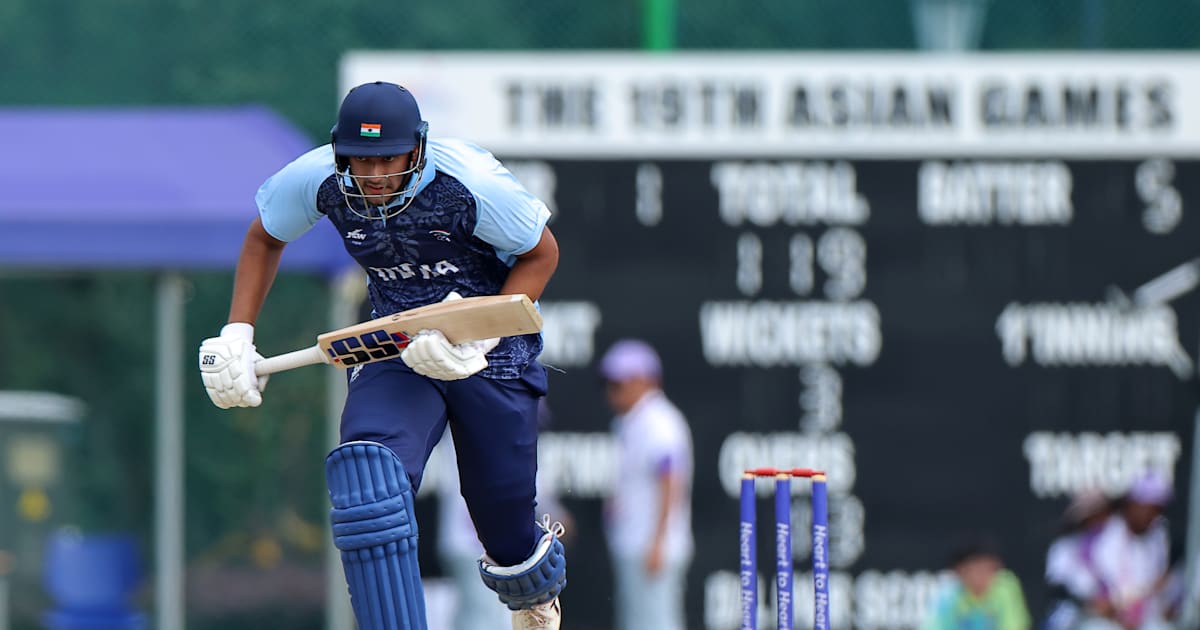
Asian Games 2026 cricket schedule
10 hours ago