
Winter Paralympics 2026: From juggling to tennis, how do athletes prepare for Para ice hockey?
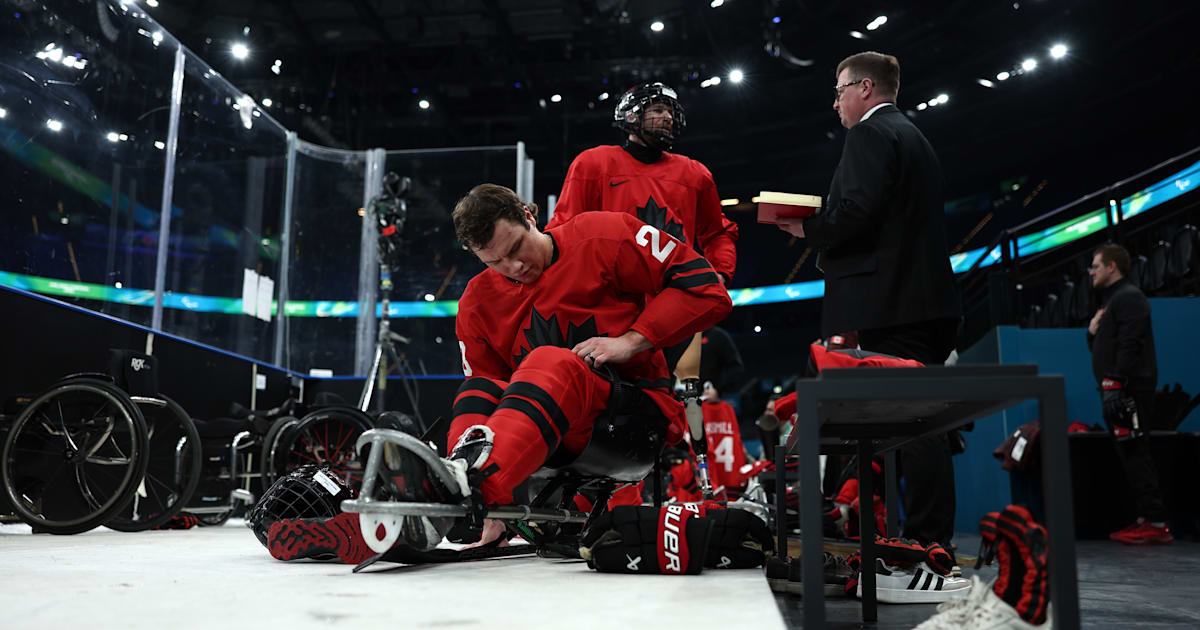
What makes Para ice hockey unique? The answer: just about everything.With rapid action, physical battles and relentless intensity, the sport will take centre stage in Milan at the Milano Cortina 2026 Paralympic Winter Games. If ice hockey was a spectacle of its own, it is time for Para ice hockey to claim the spotlight.Ahead of the start of competition on 7 February, all eight teams had the chance to train on the main ice at the brand-new Milano Santagiulia Ice Hockey Arena.The same surface it may be, but the equipment is one-of-a-kind: athletes compete with two sticks instead of one, each with spike ends on one end and blades on the other.“Players will use these to propel themselves down the ice, so they'll use these to skate, stick handle and shoot,” AJ Hurley, Team Canada’s equipment manager, tells Olympics.com. “There are very sharp picks on the ends, and they're angled so that, when players reach in front of them, they'll dig in and it provides them push back.”The spikes are no child’s play: they are sharp enough to break through players’ gloves, penetrate their team kit and scratch up sledges. Yet they also represent a significant advancement in the sport, which six-time Paralympian Greg Westlake can attest to.“The sticks are all now one piece,” Westlake tells Olympics.com, two decades since his debut. “When I started, it was a regular stand-up hockey stick cut with a wooden insert for Para ice hockey, and then you added the picks to it. It was heavier; they broke more. The sticks now are lighter, we shoot the puck harder, we pass it faster.”Exclusive: Declan Farmer on USA-Canada rivalry, board games, and desire to extend Para ice hockey dominancePara ice hockey takes centre stage at Milano Cortina 2026 - full schedule and how to watch liveMilano Cortina 2026 – juggling balls, the secret to Para ice hockey prowessOne of the key components of Para ice hockey is hand-eye coordination, a fundamental skill to efficiently switch the function of their sticks. Athletes demonstrate it by effortlessly passing the puck under their sledge as if they were dribbling a ball.It turns out that it is an ability aptly developed outside of the rink. Westlake and USA captain Josh Pauls have won a combined eight Paralympic medals, and they are not just two of the top dogs in the sport – they are also juggling experts.“I'm a pretty good juggler,” says Westlake, while quipping, “I can show you some juggling moves! But I think hand-eye coordination is huge in our sport. That ability to transition up and down the stick, play with the puck. Like anything in life, it's a sheer amount of hours grinding when nobody's watching, small progressions over time.”The 39-year-old, who also has used tennis to both train and switch off from the ice, adds: “I think it's a great lesson for everybody: whether you're a high-performance athlete or a weekend warrior, small gains over a long time can go a long way. And the best athletes in the world, that's their approach.”Four-time Paralympic champion and Team USA’s male flagbearer Pauls works meticulously on his wrist strength. He tells Olympics.com: “I juggle to get ready for hand-eye coordination. That's something that has really improved my game.“I noticed I bat more pucks out of the air, I'm able to settle things down a little bit better than before. We also put an intense strain on our joints, especially that one joint when we're picking and then shooting. Most stand-up hockey players, their stick flexes. Our sticks don't really flex, it's our arm doing that.”The New Jersey native is the United States’ captain at Milano Cortina 2026, honouring his grandfather’s Italian roots on home ice. The only player to win four Paralympic gold medals in the sport is aiming to make it five in a row at the helm of the squad.Milano Cortina 2026 – how intensity defines Para ice hockeyIn a game defined by speed and adaptability, it pays to be quick with your hands. These athletes put in the work to be able to switch their stick control in the blink of an eye, playing the puck through the thread of a needle in the arena.Quick reflexes are also useful to minimise injury – after all, this is hockey at its highest level. Whether it is the sly spikes on players’ sticks or the brute force of athletes colliding, strength and conditioning is non-negotiable to succeed.“There are a lot of injuries out there, they're very dangerous,” coach Hurley explains of the spikes. “They're almost like weapons to be honest with you, but we cut them down so they're at a 15-degree angle, which provides the best angle of attack.”The other key component of a Para ice hockey player’s kit is their sledge, which this year Team Canada have 3D printed to the athlete’s specification for the first time. Two blades sit underneath at a varied distance from each other, at the player’s preference.Thanks to modern development, Para ice hockey has never had more advanced equipment and a higher quality of play. Now it is time for fans to enjoy the sport on the grand Paralympic stage at Milano Cortina 2026.“If you're a fan coming out, be ready for some intense hockey,” says Paul. “The one difference is when those stand-up players get hit into the glass, they get hit into that glass and it moves. [Our] boards don't move. Those things are reinforced with metal. So the hits are huge, and it's a combination of hockey and bumper cars out there.“Our goal, especially when we're here, is to go short and intense just like a hockey game because that's like how hockey's played, right? When we're training at our best, it's intense and it's focused, and then we're able to come back, talk, regroup, and we're right back at it again.”

.jpg)
Most Popular


What Garrett Bradbury trade to Bears means for the Patriots
19 minutes ago
Fatima Oloko on her dream Super Falcons call
49 minutes ago
3rd National Para Games to begin March 26 in Abuja
49 minutes ago