'Troy Parrott brought it all back'
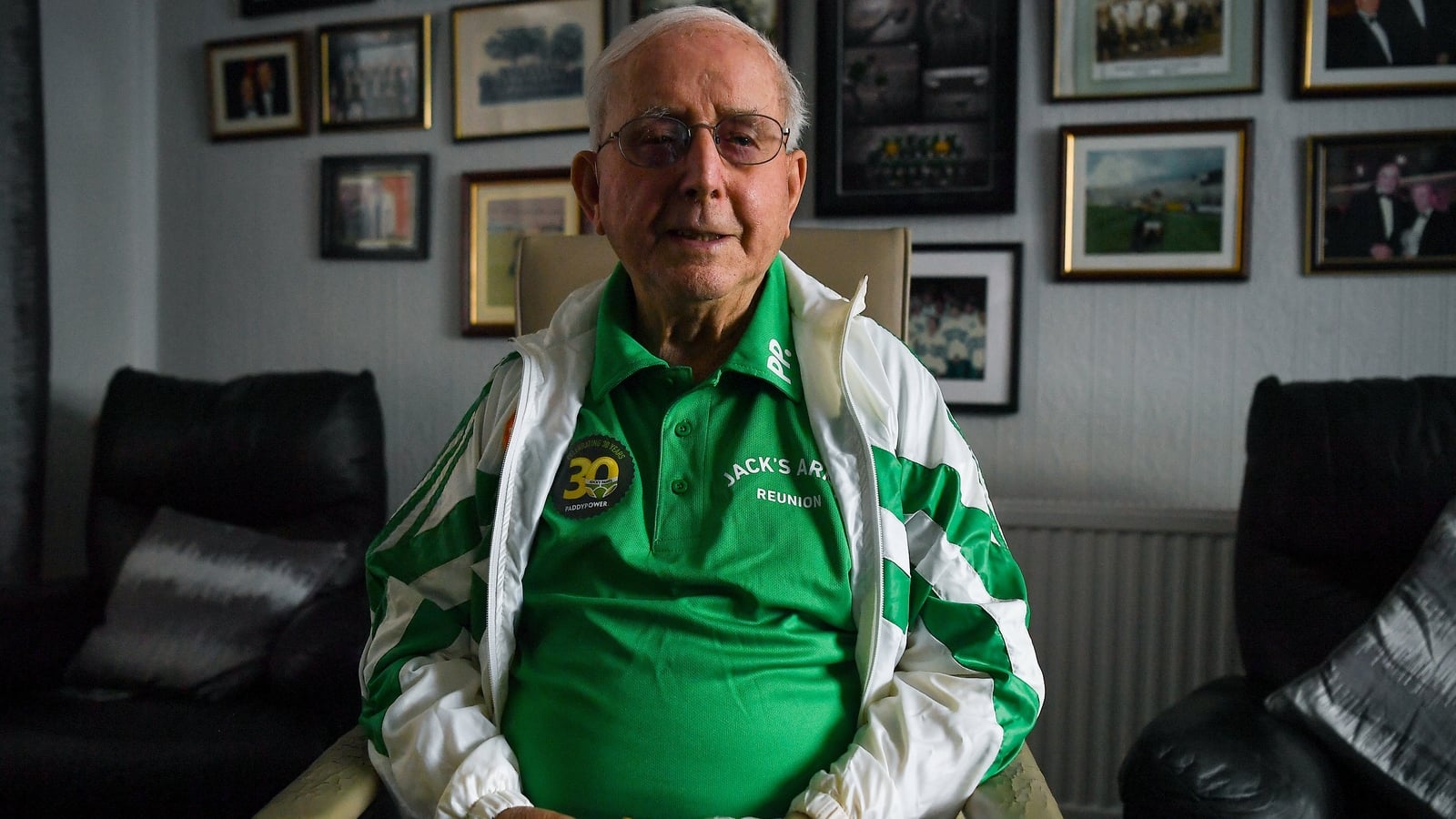
In the tapestry of Irish football, the patch embroidered by Jack Charlton will always be the measure of our dreams.And Charlie O'Leary was part of the fabric.Drift back to those days and the 5'2" kitman is there: galloping towards Packie Bonner past a disconsolate Daniel Timofte; standing awestruck in the company of the Pope; arm in arm with Ray Houghton on the pitch in Stuttgart.'The little fella', as Charlton affectionately called him, was perfect for that Ireland setup; easy to underestimate but full of common sense, enriching a joyously defiant dressing-room.Of course O'Leary's influence goes beyond those adventures in Germany, Italy and the USA.In helping to establish the famous street leagues in East Wall during the 1950s, he left a lasting legacy. John Giles, Tony Dunne, Liam Touhy, Dickie Whittaker and Noel Peyton all cut their teeth in games that drew huge crowds; for countless others, they were a precious societal outlet.The impact resonated for decades.A few years ago producer Fergus Dowd and director Joe Lee made a documentary to mark the 50th anniversary of the Dublin-Monaghan bombings. One of those interviewed for the film was Derek Byrne, who was a teenager working as a petrol pump attendant when the explosions went off on Parnell Street in 1974.On the day of the bombing he'd brought his football boots because he was due to go to London for a trial with Tottenham Hotspur. Caught up in the bombings, Derek was taken to hospital by ambulance and pronounced dead on arrival. Remarkably, he woke up in the morgue a few hours later, and was brought back to hospital for life-saving surgery.He'd played in the street leagues and spoke fondly to Fergus and Joe about his experiences. Derek sadly passed away in November 2023.There were more nods to Charlie. Joe Moran is a renowned sculptor from East Wall who created a bust of legendary Irish manager Patrick O'Connell ('Don Patricio') which sits in Real Betis' club museum. He too told the filmmakers of that period in Dublin and urged them to sit down with the man so central to it.They did, and that chat led to them producing, 'The Charlie O'Leary Story - From Johnny Cullen's Hill to The Olympic Stadium Rome', which premieres at the Light House cinema on 24 February as part of the Dublin International Film Festival.It's a burst of nostalgia and a document of a Dublin long gone. The East Wall Charlie grew up in was built on land reclaimed from the Liffey, a muddy estuary transformed into a vibrant community.In 1941, German Luftwaffe aircraft dropped four bombs on the North Strand. Charlie slept through the whole thing."He loves talking about old Dublin you know?" he says of the local priest who knocks in regularly for a chat. "He's only a young lad. I'd say he's around the 50 mark."This truly beloved football man has seen it all from every angle. The sitting room of his home in Harmonstown is a little football museum, adorned with photos and memorobilia.O'Leary started reffing when the street leagues were taking off out of necessity (no one else would do it) but learned life lessons that served him well. He'd eventually officiate the 1972 FAI Cup final, when Miah Dennehy scored a hat-trick to help Cork Hibs beat Waterford 3-0 at Dalymount Park."You learn how to judge, how to communicate and how to have confidence," he says."You have to control without arrogance. In my opinion one of the worst things brought into junior football was the red and yellow card for language problems. At junior football there's no need for that. That's where you learn the common sense part."I had a notebook in one pocket and my biro down the stocking. In my heart I'm going to book a man, but just as I approach he says, 'Charlie I'm terrible sorry'. I'd say, 'OK you're sorry, but that's your last chance'. Remember this, I'm also giving myself a last chance. That doesn't happen with red and yellow cards. There's no comeback after (a yellow card). The referee has to be consistent and keep giving them. And he's no control then, he's lost control of the game.""For the first time I had no words to say. I was speechless. That's a lovely memory."O'Leary had been working as a kind of organisational middle man for visiting international teams back in '86, but his life changed ahead of an Ireland-Wales game at Lansdowne Road when he asked Mick Byrne for a lend of a football pump. Charlton, curious about what he was doing with the Welsh, encouraged Byrne to bring O'Leary into the Irish setup. The rest is history."Jack was a magnificent man, I've never met a man with so much cop on. He knew when to speak and when not to speak, and his control was marvellous."He had so much common sense. There would be times he'd make it known that he was upset, he never pulled any punches. But he was always in control, and as far as man management went, I've never met his equal. It was absolutely perfect."I learned an awful lot about how to deal with people from listening to him."It's impossible to pick one standout memory from that tremendous Irish era, so Charlie picks two: "Number one, the day we beat England in Stuttgart. I saw grown men cry. I remember my next door neighbour coming to me and saying, 'Charlie, I can always say I was there'. There was so much happiness in that man's face."Then for me as a person, being a Roman Catholic, when we went to meet the Pope (during Italia 90). I still have that picture. The Pope is a saint now. A lot of people have said they've never seen such an expression of surprise on anyone's face. For the first time I had no words to say. I was speechless. That's a lovely memory."There's fresher memories too. He was at Aviva Stadium to watch the Boys in Green beat Portugal 2-0 in November before they went to Budapest and kept their World Cup dream alive with an iconic victory.O'Leary longs to see Ireland back on the biggest stage, to witness this generation of players and supporters have their own Stuttgart/Genoa/Giant's Stadium moment."Oh Lord, I normally sit on the very back row in the stand, but for this day because of all the extra crowd, most of the government officials were sitting in a row right behind me," he recalls of the Portugal clash."When Troy Parrott's goal was scored, government officials actually left their seats to come around and start hugging me! They were like schoolboys... they were absolutely thrilled."Parrott brought it all back, all the wonderful times. That particular occasion rebuilt all that again."And so say all of us, I really hope that young man continues as he's doing now. It was wonderful to see the old spirit back there again. Please God it will continue."

.jpg)
Most Popular

1 West Brom (Feb 14, 2026) Game Analysis
7 hours ago