Football needs to solve it's refereeing problem FAST - even if that means getting rid of VAR
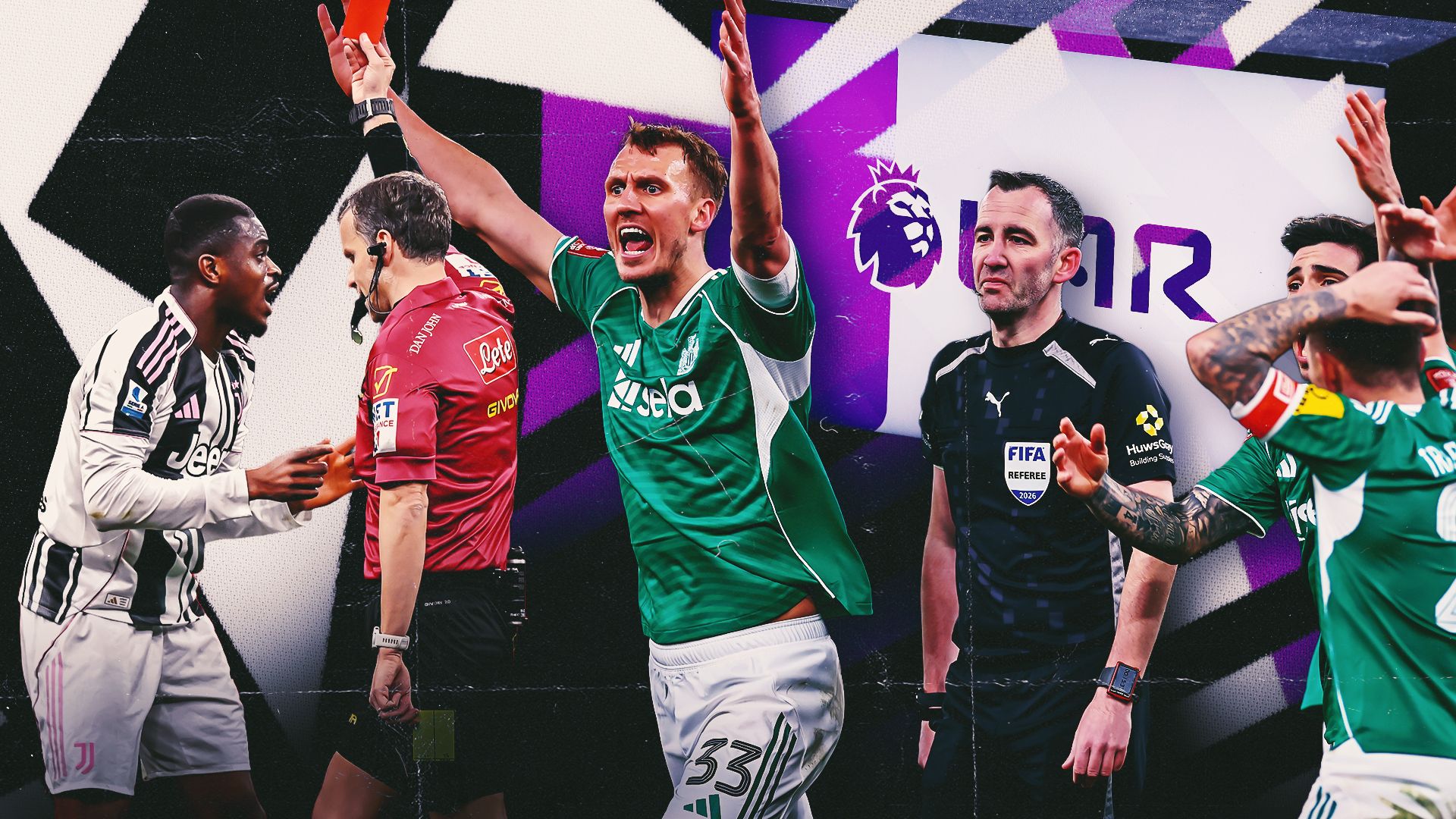
The introduction of VAR should have been a positive for football, which had lagged behind so many rival sports when it came to the effective use of technology to overturn glaring errors. Indeed, it was a no-brainer for determining whether the ball had crossed the line.Roberto Rosetti, UEFA's managing director for refereeing, stated just last week in Brussels, "Eight years ago, I came to London and we discussed what VAR stands for. We spoke about clear mistakes, because technology works so well in factual decisions. In objective decisions, it is fantastic."But subjective evaluation is more difficult. That's why we started to speak about 'clear and obvious errors', with clear evidence. And I believe that we need to speak about this again in our meetings at the end of the season because we cannot go in this direction of microscopic VAR intervention." However, the horse has already bolted in that regard.The amount of time being taken over the kind of subjective decisions Rosetti was talking about is now bordering on the ridiculous. As the Italian pointed out to The Guardian, "When you are watching the situation with the super-slow motion, you can find a lot of things."As coaches and pundits have repeatedly argued, some challenges look so much worse in replays than they do in reality. There's also mounting frustration with the perceived lack of consistency, with minor contact in the area resulting in penalties one week - but not the next.What's truly enraging, though, is that offsides aren't even a black-and-white matter with VAR. For example, in last Thursday's Copa del Rey semi-final between Atletico Madrid and Barcelona, it took the video assistant referee a staggering seven minutes to decide that Pau Cubarsi's goal should be disallowed for offside."It's a mess," Bluagrana boss Hansi Flick fumed afterwards. "They have to wait seven minutes? Come on! When I saw this situation, it was clear there was no offside. But if they find something in these seven minutes, okay, fine, but then tell us. There is no communication. It's so bad here."Poor communication is certainly an issue. When Premier League teams voted 19-1 in favour of keeping VAR in 2024, they did so under the agreement that the decision-making process would be shorter and more transparent - for the players, coaches and the supporters in the stadium.However, rulings are still sometimes poorly explained and the subsequent confusion is resulting in deeply unhelpful conspiracy theories, with Manchester City manager Pep Guardiola and midfielder Rodri now very clearly convinced that Premier League referees have a problem with their sustained success over the past decade."I know we won too much and the people don't want us to win, but the referee has to be neutral," Rodri said after this month's 2-2 draw at Tottenham. "It's not fair because we work so hard. When everything is finished, you are frustrated."Rodri's allegation of anti-City agenda is obviously rubbish, because pretty much every team in England - and the rest of Europe - has been on the wrong side of multiple contentious calls over the past eight years. There is, however, a growing feeling that VAR has actually contributed to a drop in the standard of refereeing because they've become overly reliant on the technological aid.During the opening 45 minutes of Villa's FA Cup clash with Newcastle, Tammy Abraham's offside goal was allowed to stand, the officials inexplicably ruled that Lucas Digne had handled the ball outside of the area even though he had been standing two yards inside it, while the latter also escaped what should have been a straight red card for a reckless challenge. Had there been a VAR, he would have intervened in all three instances - which is why Villa coach Unai Emery felt that the game proved that the use of technology is "necessary to help the referees". Alan Shearer, though, argued that it's actually hindering them."If you ever needed any evidence of the damage that VAR has done to referees, I think Saturday is a great example of that," the former Newcastle striker argued on Match of the Day Live. "These guys look petrified to make a decision because they didn't have a comfort blanket. For me, [referees' decisions] are actually getting worse."However, former Premier League referee Graham Scott subsequently refuted the idea that the officials are now effectively "hiding behind VAR"."I really don't think that's fair," he said on the 'Wayne Rooney Show'. "Obviously, I work with them closely and I know these guys and they're not like that. It's not how their minds work, not how their processes work."I spent half my career with VAR and half without it, the other way around of course, without it first. And then when I was in the Premier League I was still dropping into the Championship quite often. So you're in and out, in and out. And your processes essentially stay the same."What has changed though is with VAR you don't have that spell in a game where you know you've made a really big error and you now have to reset and go again because the VAR has basically either put it right for you by telling you go and have another look and you change your decision. Or they've said that it's not a clear and obvious error, so you may come off the pitch thinking, 'Actually, I would have been better off giving a penalty or not or giving a goal' or whatever, but at least the VAR has confirmed it's not a terrible call."So, I have both sympathy and empathy [for the officials] because I've been there, we all make those mistakes and afterwards you sometimes can't believe what you're seeing when you watch it back. You think, 'How did I get that wrong?'"That very question was certainly running through Federico La Penna's mind after the Derby d'Italia at San Siro on Saturday night.Just three minutes before half-time in Milan, Alessandro Bastoni burst past Pierre Kalulu before throwing himself to the floor, prompting La Penna to issue the Juventus defender a second yellow card for a perceived pull of the shirt. In reality, the second yellow should have gone to Bastoni for a pathetic act of simulation.Kalulu was left in a state of disbelief and was calling for VAR to intervene, clearly unaware that it was not allowed to do so. Almost inevitably, pandemonium ensued, as Juventus directors Giorgio Chiellini and Damien Comolli made their way down from the stands to confront La Penna in the tunnel as he made his way back to his dressing room at half-time.Obviously, the controversy didn't end there, with Chiellini effectively calling for Gianluca Rocchi, the head of the referees' association in Italy, to resign."We cannot talk about football after what happened today," the former Juventus defender told Sky Sport Italia. "Something completely unacceptable happened today, it doesn’t matter whether it happens to us or someone else, and from tomorrow presumably VAR will have to change, because this is not acceptable that so many errors keep happening even in big games like this."We’ve been trying to say since the start of the season that the level of refereeing is not up to the task. I don’t know if they’re not trained properly, not up to the task, whatever the reason for it, the fact is the referees are not up to the standard of Serie A football and this, unfortunately, is the spectacle we showed to the rest of the world today."It happened to many teams this season, we have to change, we cannot keep procrastinating the way we always do in Italian football. Last week, Daniele De Rossi complained, before that Gian Piero Gasperini and Antonio Conte, so we are not the first and not the last. Something clearly isn’t working and one of the first things we can do is change the protocol."However, a change of culture would be just as beneficial - if not more so.La Penna was, according to Rocchi, "mortified" by his error, but he wasn't about to take the criticism of the official lying down - particularly as La Penna had been subjected to now customary online death threats immediately after the game."He is not the only one who got it wrong, because there was a clear simulation," Rocchi told ANSA. "The latest in a long series in a league where they try everything they can to cheat us."It was an incredibly valid point because Bastoni hadn't just conned the referee into dismissing Kalulu, he'd also celebrated doing so in what became the abiding image of the entire evening.The Inter defender had effectively shown the world the true face of modern football, the ugly side of 'The Beautiful Game', and although the abuse that he also received went way over the line, there was simply no defending his actions. And yet Inter coach Christian Chivu tried to by ludicrously claiming that Kalulu had impeded Bastoni, while others simply savoured the undeniably delicious irony of Juventus complaining about refereeing decisions.But this is also a major part of the problem: officials are being blamed for failing to adequately deal with diving - not the perpetrators or even the facilitators, who are making a difficult job almost impossible. "The have never helped us," Rocchi said, "but they have made things for difficult for us."It's impossible to disagree. There are countless examples of deceit and deflection, from Pedri infamously winking to his team-mates after earning a non-existent foul during the dying minutes of normal time in last season's Champions League semi-final at Inter before later calling for UEFA to investigate referee Szymon Marciniak over his handling of the game, to Jose Mourinho unleashing a torrent of abuse at Anthony Taylor in the carpark after Roma's 2023 Europa League final loss to Sevilla that led to the Englishmen being verbally abused in front of his family the following day.Guardiola even shamefully accused Farai Hallam of trying to make a name for himself on his Premier League debut in last month's game between Manchester City and Wolves by becoming the first top-flight official to stand by his original decision after being asked to review a handball incident by the VAR - which only begged the question, why would anyone these days want to become a referee?The sad thing is that, as it stands, officiating is only going to become an even more divisive issue in the coming weeks and months - because so many people still have no idea where they stand on the matter."I'm so torn because the game is better without VAR in terms of excitement and the spectacle for the supporters and us when we're living a moment live," Newcastle boss Eddie Howe admitted at Villa Park on Saturday. "But it does give accurate results. It does make the game more precise in terms of decision-making. You have to respect those moments. They're worth their weight in gold."And this is the crux of the matter. VAR was brought in because too many monumentally costly errors were being made in a game that has become a billion-dollar industry. In the financially-mismanaged world of football, relegation - or even failing to qualify for the Champions League - can have calamitous consequences for a club. The stakes have essentially become so high that glaring errors cannot be tolerated.VAR, though, remains far from flawless because the technology is still being operated by human beings, and so many of the decisions being reviewed are open to different interpretations.It, thus, feels like less VAR would be the best possible outcome, for now at least, because there's a very real prospect of incessant delays at the upcoming World Cup. Of course, taking such a drastic step now would require an almost universal buy-in from all of the game's major stakeholders, and that just doesn't look like happening anytime soon."Sometimes before I thought it was better without VAR and sometimes I think VAR helps us to have a fairer game," Guardiola recently admitted. "So, to be honest, I don't know."What we do know, though, is that referees need help, and if they're not going to get it from VAR, then players, coaches, supporters and the press need to play their part by accepting an increase in errors and ending the deception, demonization and death threats that are making their lives a misery.


.jpg)
Most Popular


Captains come out in support of Imran Khan
8 hours ago


Geoff Mason obituary: television producer
15 hours ago