
Pre-eminent Munster two games from near clean sweep
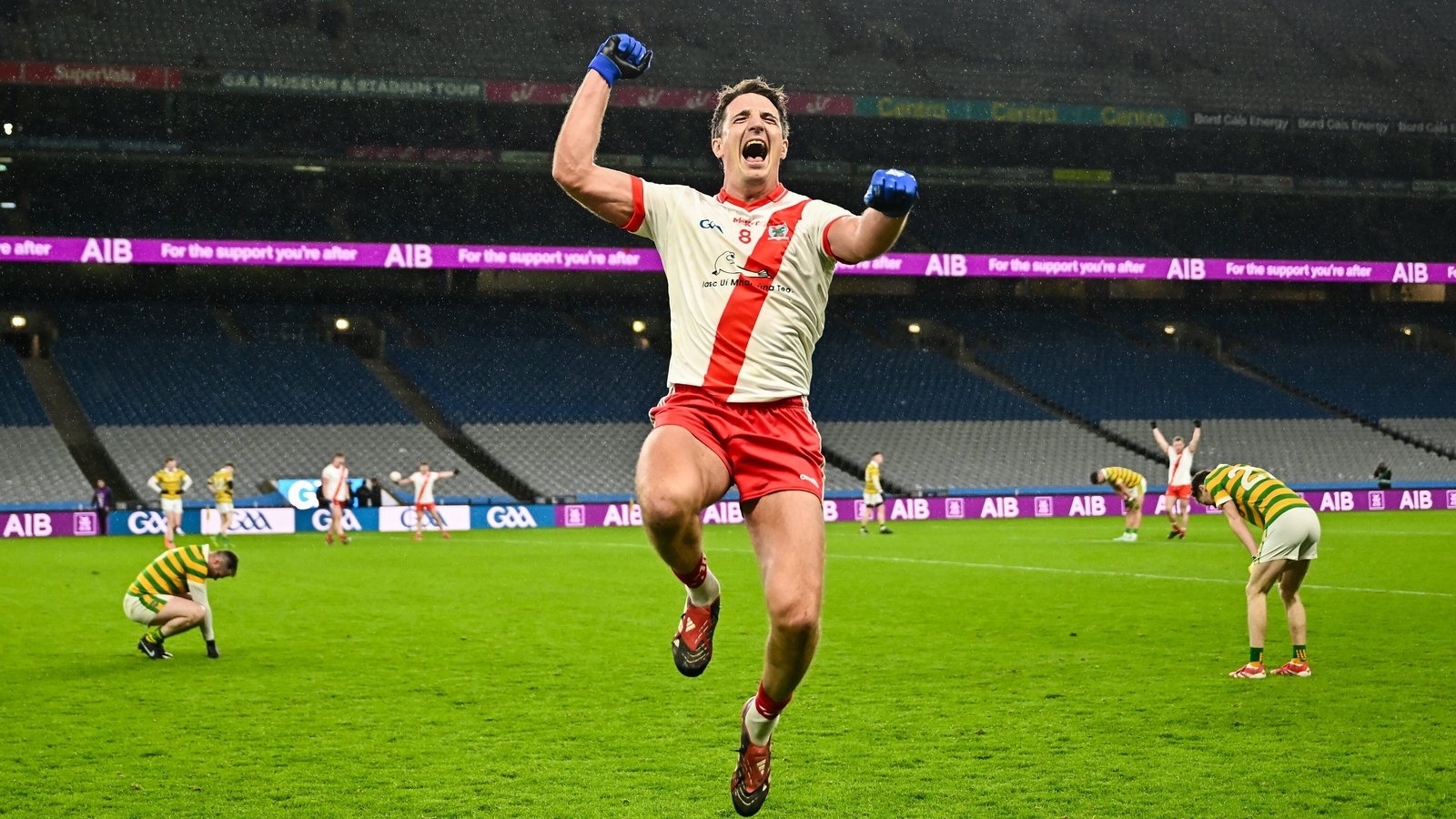
If 2024 was a year when Ulster football people hogged the bragging rights, then the last 12 months have been a case of Munster uber alles, across both codes.Should Daingean Uí Chúis and Ballygunner complete a Munster double in the senior club championship, the province will have won almost every top tier national title over the past year, save the All-Ireland Under-20 and minor football championships - both of which were won by Tyrone.Both senior All-Irelands, both the hurling and football league, the U20 and minor hurling titles, and the intermediate and junior club titles in both sports - they've all headed south.On top of that, the Munster Council are rolling in cash after the latest lucrative installment of their provincial hurling championship. Gate receipts for the Munster SHC surpassed €9.5 million in 2025 as the round robin continues to be an incredible bonanza for the province - ironic given most of their counties were implacably opposed to it when it came to a vote in 2017.In the main, there isn't too much triumphalist crowing about this winning run that the province of Munster is on, at least compared to their northern brethren the previous year.After the events of last July, Cork GAA people might not take kindly to being asked to toast Munster's bumper year. (Though, for the purposes of full disclosure, it was a Cork fan in the office who did alert us to this stat).You wouldn't need to be a keen observer to note that provincial loyalty differs markedly from province to province.If you asked someone from Meath or Kildare, for instance, whether they were shouting for the Dublin footballers in an upcoming All-Ireland final for the sake of the ancient province of Leinster, they'd look at you like you were suffering from a heavy concussion.Ditto in the case of Kerry and Cork. As Paul Galvin detailed in the cult documentary 'Galvinised', Cork's victory over Down in the 2010 All-Ireland final - which he made clear he wasn't inclined to sit down and watch in its entirety - cast a massive, craic-killing shadow over a stag he was attending on the same day.Connacht, back in their days as the poor relation in the 1980s and early 90s, used to be a place where provincial solidarity thrived. The Galway-Mayo rivalry was once a relatively genial and good-natured affair. As we've observed before, 'Will Galway bate Mayo, not if they've Willie Joe!' isn't exactly from the 'We all hate Leeds scum' school of fan refrains.That spirit evidently hasn't survived the modern era of wall-to-wall podcasts. The relationship between the Connacht old firm is far more 'Premier League' than it was back in the day, with all the attendant banter and schadenfreude that this implies.Ulster is perceived - at least down south - as an exception to this, for, one has to say, understandable political and historical reasons.It became a running joke late last season that every Ulster pundit was allegedly incapable of tipping against an Ulster team in the latter stages of the championship.All six of the BBC's Gaelic football pundits couldn't look past Donegal ahead of last July's All-Ireland final - hardly an outrageous prediction on its own, although the uniformity of opinion was nonetheless striking.This tendency left them deep in the red in the summer of 2025.After the inter-county season was finished, there was some evidence of Ulster-based journalists being harassed by online Kerry vigilantes, keen to get them to both admit their wrongness and to prostrate themselves at the altar of the Kingdom's greatness.On the football side of the house, there's only one county responsible for this haul of trophies.Jim Gavin's legacy risks being recalled as fondly in Kerry as it is in Dublin based on Year 1 of the FRC reforms.David Clifford went from being a high-class decoy in 2024, perpetually surrounded and smothered by a phalanx of prison guards, to a near-unmarkable proposition in 2025.More conspiratorially minded folk up north might have been forgiven for thinking the rules were specifically designed to ensure the ancien regime returned to power and that they didn't have to cope with any more annoying tactical curveballs from Ulster.The difficulty for Kerry's opponents is that whenever a defence went all out to curb Clifford under the new rules - as Armagh did to an extent in the first half of the quarter-final - that only left more space for Seanie O'Shea on the edge of the arc.Having won the league and championship double at county level - the fifth time this was achieved under Jack O'Connor's management - they're on the cusp of a clean sweep in the January club finals. Their dominance of the intermediate and the junior grades is longstanding and a sore point elsewhere given the unique structure of their county championship effectively guarantees a higher calibre of entrant to the second and third tier competitions.However, the divisional system has probably impeded their performance in the senior club championship, with Dr Crokes in 2017 their only winner in the 21st century. Daingean Uí Chúis, with Paul Geaney in mesmeric form, have surely, like the Kerry seniors, been the beneficiaries of the new rules, not least in their controversial Munster SFC victory.Munster's pre-eminence in hurling is nothing new but it has become more pronounced in the round robin era. We've had two all-Munster All-Ireland finals in a row for the first time and one has to go back to Galway in 2017 for the last time a non-Munster county won the All-Ireland.There is evidence of a growing provincial schism in the round robin era.This partly centres around Leinster resentment of Munster hurling supremacism - the 'Munster hurling snob' has emerged as a more virulent and self-adoring variant of the traditional hurling snob. The rhapsodic, self-congratulatory strain in Munster hurling people was always more pronounced even back in the days when Kilkenny were still winning all around them.On the flipside, Munster hurling folk have come to resent the comparatively soft path to the All-Ireland series that faces Kilkenny, in particular, and there have been occasional calls to increase to four the number of All-Ireland series spots available to Munster counties.This silly proposal, as Munster CEO Kieran Leddy noted this week, would have the effect of neutering what is a wildly successful provincial format, whose box-office appeal lies precisely in its cut-throat nature.Indeed, it could be argued that the hothouse nature of the Munster SHC has sharpened the competitive energies of the competing counties in the province - and been in a significant factor in the current era of dominance.

.jpg)
Most Popular




India vs New Zealand: The Ultimate ODI Decider
5 hours ago